The 88 hours of aerial conflict between India and Pakistan in May 2025 known as Operation Sindoor has long been shrouded in the fog of war, a contest of competing narratives and unverified claims. However, a new exploratory note from the Centre for Military History and Perspective Studies (CHPM) has finally cut through the propaganda, offering an unprecedented, unvarnished glimpse into the operation’s details and how the battle truly unfolded. This document, which synthesizes technical data and operational accounts, throws critical light on the complex confrontation between two nuclear-armed states, fought not with the massed armour of old, but with the surgical precision of long-range missiles, the silent menace of drones, and the blinding complexity of integrated air defense networks. More than a mere border skirmish, the CHPM’s analysis of Sindoor reveals a pivotal moment in modern military history, a brutal contest where technological parity and strategic communication proved as decisive as firepower, the full details of which were not independently verified prior to this publication [1]
The Gathering Storm: A Doctrine of Escalation
The conflict was the latest, and most intense, manifestation of the long-standing tension between New Delhi and Islamabad, a rivalry perpetually constrained by the shadow of nuclear deterrence. This dynamic, often termed the stability-instability paradox, allows for conventional or sub-conventional aggression—such as the use of Pakistan-based radical Islamist groups—because the threat of nuclear retaliation prevents a full-scale conventional war [1].
India’s response to such provocations had been steadily escalating. The 2019 Balakot air strike (Operation Bandar), a retaliatory raid against a terrorist camp, was a clear signal of New Delhi’s willingness to strike deep into Pakistani territory. However, the subsequent air battle, Operation Swift Retort, saw the Pakistan Air Force (PAF) achieve a propaganda victory by shooting down an Indian MiG-21 Bison, exposing weaknesses in the Indian Air Force’s (IAF) older systems and its ability to counter sophisticated jamming [2].
The catalyst for Operation Sindoor was a terrorist attack in Pahalgam on April 22, 2025, which killed 25 Indian tourists. The Indian political leadership, granting the armed forces complete freedom, demanded a response “sufficiently spectacular to deter further terrorist attacks” [3]. This marked a drastic shift in doctrine: any future serious incident originating from Pakistan-based terrorist movements would be considered inseparable from Pakistan’s military apparatus, warranting a decisive, high-level response [1].
The Arsenal: A Comparative Analysis
The 88-hour war was a clash between two highly professional air forces, both equipped with small fleets of state-of-the-art aircraft and supported by sophisticated command and control systems. Yet, their structural differences proved critical.
| Force | Key Strengths | Key Weaknesses/Constraints |
| Indian Air Force (IAF) | Strategic Depth: Bases far from the border. Integrated Air Defence: Highly effective, multi-layered IADs (S-400, Akash, Akashteer) that proved nearly impenetrable. Stand-off Capability: Superior long-range missiles (BrahMos, SCALP-EG, Rampage) for decisive strikes. Mass & Modernization: Larger overall fleet with advanced Western (Rafale) and Russian (Su-30MKI) platforms. | Initial Tactical Loss: Loss of a high-value Rafale in the opening engagement. |
| Pakistan Air Force (PAF) | Tactical Prowess: Demonstrated skill in air-to-air combat, achieving an initial victory. Chinese Modernization: Access to advanced Chinese systems (J-10C, PL-15 long-range missiles, CM-400AKG). Strategic Communication: Highly adept at controlling the narrative, particularly in the West. | Lack of Strategic Depth: Most air bases within easy reach of Indian tactical aviation. Economic Constraints: Chronic morass limits long-term sustainability and scale. Failure of Stand-off Strikes: Inability to penetrate the Indian IADs with drones and missiles. |
The IAF had achieved a major capability leap with the induction of the Rafale, armed with the long-range Meteor air-to-air missile, and the deployment of the Russian S-400 long-range surface-to-air missile system [1]. Conversely, the PAF relied heavily on its Chinese-supplied J-10C fighters and PL-15 long-range air-to-air missiles, a direct counter to the IAF’s arsenal [1].
The Battle Unfolds: From Tactical Sting to Strategic Checkmate
The First Salvo and the Tactical Sting (Night of 7 May)
Operation Sindoor began with a series of long-range Indian strikes against terrorist infrastructure deep inside Pakistan, notably the JeM headquarters at Bahawalpur and the LeT headquarters at Muridke. The IAF used Rafale and Mirage 2000I aircraft to launch precision-guided munitions, with one formation deliberately penetrating Pakistani airspace at low altitude before executing a pop-up maneuver to guide its bombs [1].
The PAF’s response was swift and effective. Scrambling J-10C and JF-17 fighters, the PAF concentrated its fire on the high-value Rafale jets. Using their long-range PL-15 missiles, the PAF achieved a clear tactical victory, shooting down at least one Indian Rafale [1]. This loss, which attracted significant international media attention, became the centerpiece of Pakistan’s immediate strategic communication, effectively masking the broader failure of their air defense to prevent the initial strikes.
The Impenetrable Bubble (8-9 May)
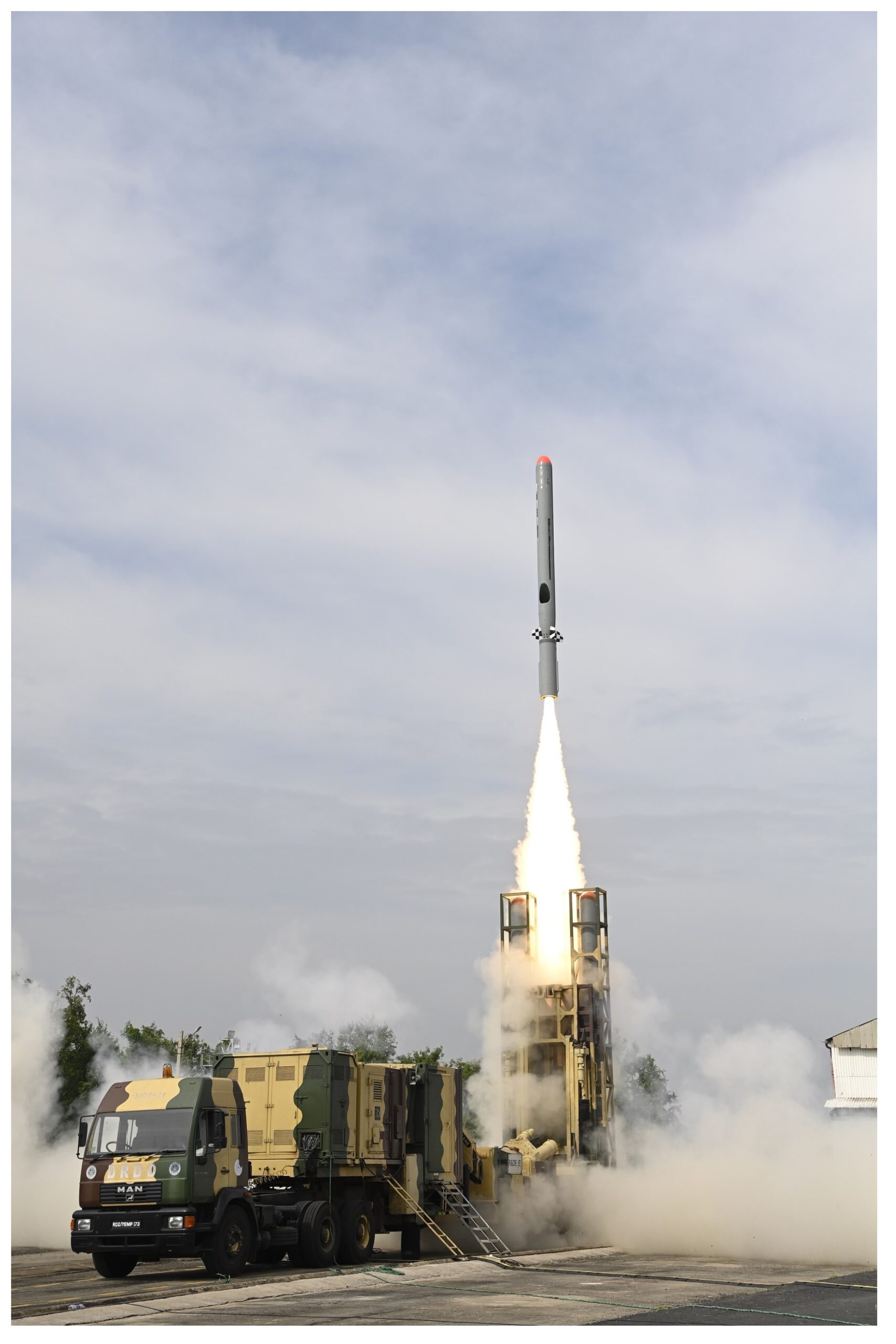
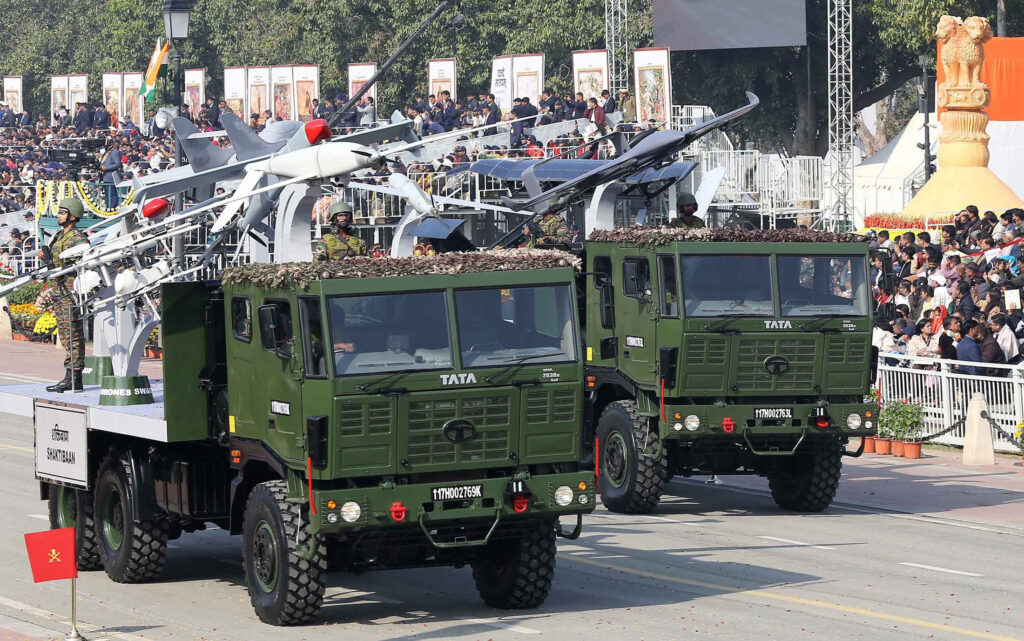
Following the initial exchange, the conflict entered a phase of intense, but ultimately one-sided, stand-off warfare. The PAF launched two massive waves of counter-strikes, codenamed Operation Bunyanum Marsoos, targeting key Indian air stations and S-400 batteries with a barrage of approximately 600 drones, long-range artillery rockets, and ballistic missiles [1]. The intent was to saturate the Indian defenses and neutralize the S-400 system.
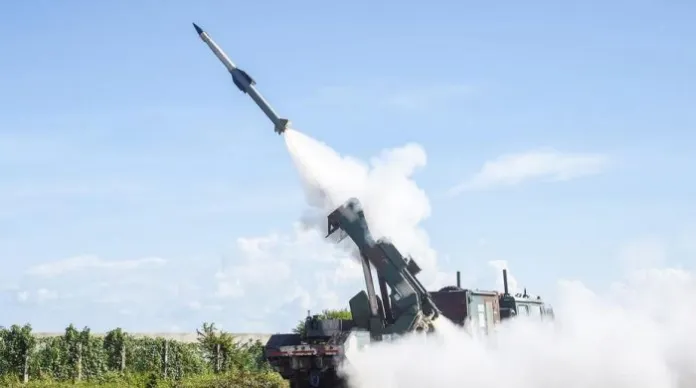
However, the effectiveness of the Indian Integrated Air Defence System (IADs) proved to be the conflict’s greatest surprise. The IADs, described as a “redundant, hardened and decentralised” system, acted as an “impenetrable bubble” [1]. Most incoming munitions were intercepted, and the S-400 batteries, which were relocated when they risked detection, successfully kept Pakistani fighters at a distance. The PAF’s effort to achieve a decisive counter-strike failed to reach critical Indian centers [1].
Simultaneously, the IAF launched its own discreet campaign of air interdiction, using Israeli-origin Harop and Harpy loitering munitions to systematically degrade Pakistani air defenses. This operation resulted in the visually documented neutralization of at least two early-warning radars and a claimed strike on an HQ-9 battery [1]. The cumulative effect was a drastic reduction in Pakistani airspace coverage, paving the way for the final, decisive phase.
The Blitz of May 10th: Strategic Checkmate
The final act of Operation Sindoor was a display of overwhelming Indian stand-off capability. After the PAF’s third, and equally ineffective, wave of attacks concluded, the IAF launched a massive, two-wave counterstrike between 02:00 and 10:00 on May 10.
Operating entirely from within Indian airspace, the IAF used its long-range missile arsenal—BrahMos, SCALP-EG, and Rampage—to strike seven sites up to 200 kilometers inside Pakistani territory [1]. The targets were not forward positions, but the very heart of the PAF’s operational capability:
- Nur Khan Air Base: A command-and-control center was destroyed.
- Murid Air Base: The hub of Pakistan’s MALE drone fleet, with hangars and a control center severely damaged.
- Sargodha Air Base: The intersection of its runways was hit, rendering the base inoperative.
- Jacobabad and Bholari Air Bases: Maintenance hangars, radars, and an Erieye aircraft hangar were struck [1].
The strikes were a strategic checkmate. By noon on May 10, with its principal air force stations crippled and its air defense degraded, Pakistani military authorities requested a ceasefire, which India swiftly accepted [1]. The IAF claimed to have destroyed or severely damaged at least four to five F-16s, one Erieye, one C-130 transport, and multiple MALE drones on the ground, all at the cost of roughly fifty long-range munitions [1].
The Enduring Lessons of Sindoor
Operation Sindoor confirmed several critical trends in modern warfare:
The Supremacy of Stand-Off Weapons: The conflict was defined by the long-range missile. Both air-to-surface (BrahMos, SCALP-EG) and air-to-air (Meteor, PL-15) weapons, with ranges extending hundreds of kilometers, were the spearhead of operations. The ability to strike critical infrastructure without crossing the border proved decisive, fundamentally altering the risk calculus of conventional conflict [1].
The Integrated Joint System: Air warfare is no longer a contest between air forces, but a contest between integrated joint systems. India’s success was not solely due to its aircraft, but to the seamless coordination of its S-400 batteries, its command-and-control network, and its diverse arsenal of effectors. Even seemingly obsolete weapons, like anti-aircraft artillery, played a significant role when integrated into this modern ecosystem [1].
The Battle of Perception: Despite the strategic defeat, Pakistan’s focus on the single Rafale loss in its strategic communication effectively masked the broader failure to defend its territory and project power. The IAF, having learned from the 2019 Balakot incident, countered by carefully corroborating its claims with satellite imagery and open-source intelligence, winning the battle of perception in the aftermath [1].
Operation Sindoor was a stark demonstration that in the age of advanced long-range systems, strategic depth and a robust, integrated defense network are paramount. It underscored a new, dangerous paradigm on the subcontinent, where a terrorist act can now trigger a conventional military clash of considerable magnitude, fought with the most advanced tools of war, and always under the ever-present shadow of nuclear escalation.
References
[1] Adrien Fontanellaz, Operation Sindoor: The India-Pakistan Air War (7-10 May 2025), CHPM exploratory note No. 1, 15 January 2026.
[2] Sanjay Badri-Maharaj and Everton Pedroza,Terror and Response. The India-Pakistan Proxy War 2008-2019, Warwick, Helion and Company, 2023.
[3] Air Marshal Narmdeshwar Tiwari, address at the NDTV defence summit, 30 August 2025.