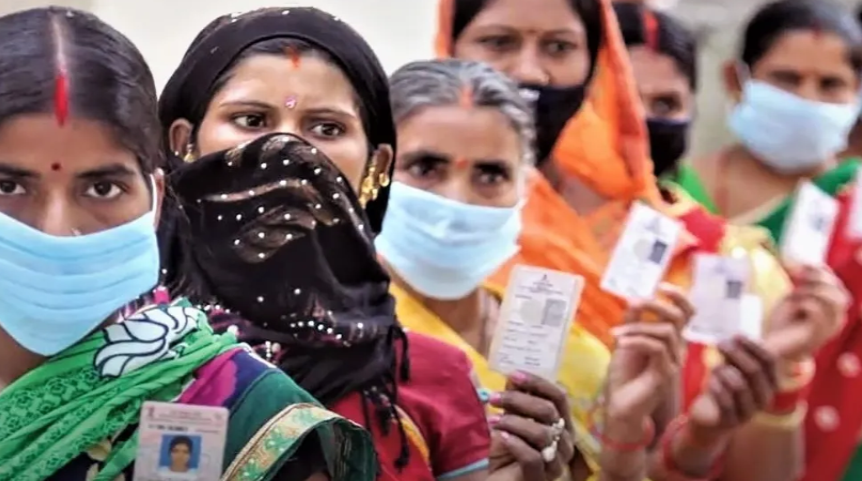
Tamil Nadu has witnessed a historic moment in its democratic journey, recording an unprecedented voter turnout of over 84% in the 2026 assembly elections [1]. This remarkable figure surpasses the state’s previous gold standard of 78.01% set in 2011 [1]. However, behind this staggering percentage lies a complex mathematical reality shaped by the Election Commission of India’s recent administrative exercises. To truly understand what this means for the state’s political future, we must examine the data beyond the surface percentages and look at historical precedents across India where states have crossed the elusive 80% mark.
The Mathematical Illusion of the 2026 Turnout
The narrative of the 2026 Tamil Nadu election is defined by what political observers are calling the “80 per cent paradox” [1]. While the percentage of voter participation has reached an all-time high, the absolute number of voters has actually decreased. This phenomenon is the direct result of the Special Intensive Revision (SIR) carried out by the Election Commission of India, which meticulously removed duplicate entries and deceased voters from the electoral rolls [1].
The impact of the SIR on the state’s demographics is substantial. The total electorate shrank from 6.29 crore in 2021 to 5.73 crore in 2026—a reduction of approximately 56 lakh voters [1]. Because the total pool of registered voters is significantly smaller, any given number of votes cast will naturally result in a higher percentage. To match the raw volume of civic participation seen in the historic 2011 election, Tamil Nadu would have needed to hit an unprecedented turnout of 80.6% [1]. By crossing the 84% threshold, the state has indeed seen a massive absolute turnout, but the percentage itself is mathematically inflated by the streamlined voter rolls.
Despite the shrinking overall electorate, the demographic composition of the voters has evolved significantly. The 2026 election represents the most inclusive voter roll in the state’s history. Women voters now number 2.93 crore, outnumbering men by a clear 10 lakh—a gap that has widened progressively from 3 lakh in 2016 to 6 lakh in 2021 [1]. Furthermore, registered third-gender voters have risen to 7,728, a significant jump from the 1,394 recorded when the category was first introduced in 2011 [1]. The inclusion of 14.59 lakh first-time voters also mirrors the youth surge that drove the landmark 2011 election [1].
| Election Year | Total Registered Voters | Votes Polled | Turnout Percentage |
| 2026 | 5,73,00,000 (approx.) | ~4,84,00,000 | 84.60% |
| 2021 | 6,29,43,693 | 4,58,91,125 | 73.63% |
| 2016 | 5,77,91,397 | 4,32,05,158 | 74.81% |
| 2011 | 4,71,15,846 | 3,67,56,813 | 78.01% |
Pan-India Precedents: The Elusive 80% Mark
Crossing the 80% voter turnout threshold is an exceptionally rare occurrence in Indian assembly elections. Historically, high turnouts have often been interpreted as a sign of anti-incumbency or a strong desire for change. However, an analysis of recent elections where states breached this mark reveals a more nuanced reality.
The Incumbency Validation Model
In several recent instances, exceptionally high voter turnout has served to validate and return the incumbent government to power with a decisive mandate.
West Bengal (2021 and 2026): West Bengal has consistently recorded some of the highest voter turnouts in the country. In the 2021 assembly elections, the state recorded an 82.30% turnout [2]. Rather than signaling anti-incumbency, this massive participation resulted in a landslide victory for the ruling Trinamool Congress (TMC), which secured 215 out of 294 seats [2]. The ongoing 2026 elections in the state have seen even higher numbers, with Phase 1 recording a staggering 91.91% turnout—the highest since independence [3].
Assam (2026): Alongside Tamil Nadu, Assam also went to the polls in April 2026, recording an all-time high turnout of 85.8% [4]. This surpassed its previous record of 84.7% set in 2016 [4]. Similar to Tamil Nadu, Assam’s electorate had also been streamlined through the SIR process, with net deletions of around 2.4 lakh voters [4]. Early projections suggest this high turnout may favor the incumbent government, with Chief Minister Himanta Biswa Sarma projecting a sweeping mandate of over 90 seats in the 126-member assembly [4].
Sikkim (2024): In the April 2024 assembly elections, Sikkim recorded a turnout of 79.77%, just shy of the 80% mark, while its lone Lok Sabha seat crossed 80.03% [5]. This high level of engagement resulted in a massive victory for the incumbent Sikkim Krantikari Morcha (SKM), which won 31 out of 32 seats, completely decimating the opposition [5].
The Anti-Incumbency Wave Model
Conversely, there are notable instances where crossing the 80% threshold has indeed heralded a significant change in government.
Mizoram (2023): In November 2023, Mizoram recorded an 80.66% voter turnout [6]. This high participation translated into a decisive mandate for change. The opposition Zoram People’s Movement (ZPM) swept the elections, winning 27 out of 40 seats and unseating the incumbent Mizo National Front (MNF) government [6]. This serves as a classic example of high turnout reflecting voter dissatisfaction and a desire for a new political direction.
Interpreting the Tamil Nadu Verdict
As Tamil Nadu awaits the final results of its historic 2026 election, the pan-India data suggests that the 84%+ turnout cannot be simplistically categorized as either a pro-incumbency or anti-incumbency wave. The electoral arena this year witnessed an unprecedented triangular contest between the ruling DMK-led alliance, the AIADMK-led opposition, and the newly formed TVK led by actor Vijay [1].
The massive turnout, while mathematically amplified by the SIR process, still represents a deeply engaged electorate. The addition of over 14 lakh first-time voters and the widening gender gap in favor of women voters indicate that new demographic segments are actively participating in shaping the state’s future. Whether this engaged electorate has chosen to validate the incumbent government, as seen in West Bengal and Sikkim, or opted for a sweeping change, as witnessed in Mizoram, remains to be seen. What is certain is that the 2026 election has redefined the benchmarks of democratic participation in Tamil Nadu.
References
[1] The Week. “SIR and the ’80 per cent’ paradox: How Tamil Nadu’s streamlined voter rolls skew election insights.” April 23, 2026.
[2] Wikipedia. “2021 West Bengal Legislative Assembly election.”
[3] India Today. “What highest-ever voting of 92% in West Bengal election reveals.” April 23, 2026.
[4] The Times of India. “Assam, Puducherry record highest-ever voter turnouts.” April 10, 2026.
[5] Wikipedia. “2024 Sikkim Legislative Assembly election.”
[6] Wikipedia. “2023 Mizoram Legislative Assembly election.”