The recent international law enforcement action, dubbed Operation Hardball, has pulled back the curtain on a sophisticated and violent network of Indian-origin criminal syndicates operating across multiple continents.
Led by the FBI and involving agencies in Canada and Europe, this operation resulted in 24 arrests in July 2026, targeting groups that have evolved from local gangs into transnational criminal enterprises [1] [2].
Operation Hardball represents a significant milestone in the fight against organized crime linked to the Indian diaspora. The operation primarily targeted three prominent India-based transnational organized crime groups: the Lawrence Bishnoi Gang, the Goldy Brar Network, and the Jaggu Bhagwanpuria Gang [1]. These groups are charged with a litany of criminal acts, including racketeering, targeted killings, extortion, and the trafficking of bulk quantities of narcotics [1] [3].
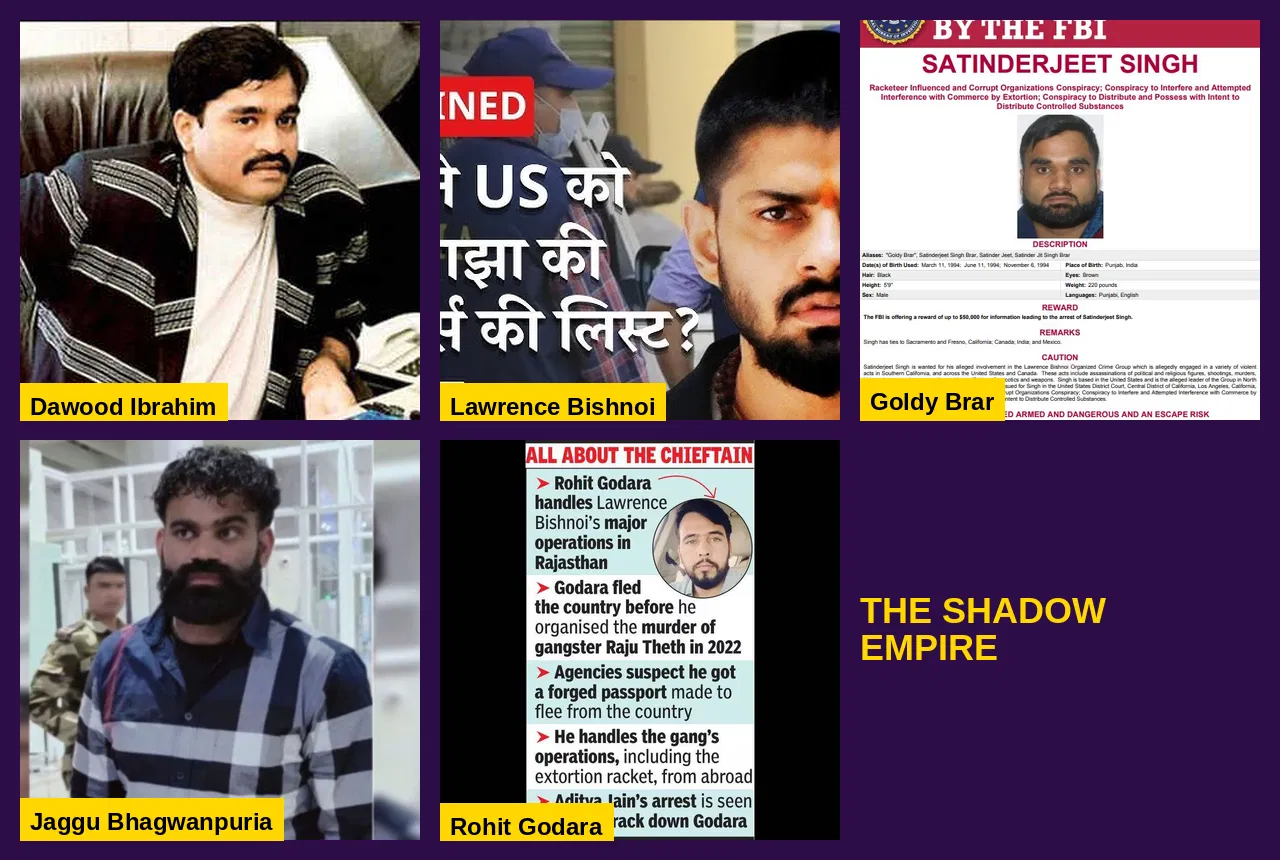
At the heart of this global network is Lawrence Bishnoi, a 33-year-old gangster who, despite being imprisoned in India for over a decade, has allegedly managed to direct a sweeping criminal enterprise. Bishnoi operates what can be described as a “franchise” model, where local criminals or smaller gangs can affiliate with his brand to gain notoriety and leverage. He utilizes contraband cellphones and encrypted communication tools smuggled into his jail cell to make strategic decisions, orchestrate high-profile targets, and build his gang’s public image [1] [8].
His trusted lieutenant, Satinderjeet Singh, better known as Goldy Brar, serves as the alleged North American leader of the syndicate. Brar manages logistics, recruits local diaspora youth, and coordinates with other international gangs. He is currently on the FBI’s most wanted list with a $50,000 reward for his capture [1]. Another key figure, Rohit Godara, functions as the “Regional Manager” for Europe, handling extortion and logistics across European countries [1]. The gang’s activities include:
- Extortion: Targeting wealthy Indian diaspora members (businessmen, actors, singers) via encrypted messaging apps like WhatsApp and Signal, often using threats of violence against victims or their families [1] [13].
- Targeted Killings: Orchestrating high-profile assassinations (e.g., Sidhu Moose Wala, Hardeep Singh Nijjar) to build the gang’s reputation and instill fear [1].
- Drug Trafficking: Engaging in the movement of bulk cocaine and heroin, frequently stealing shipments from rival gangs to fund their operations [1].
- Human Smuggling: Facilitating the illegal entry of gang members and other individuals into countries like the US and Canada [1].
D-Company: The Enduring “Corporate” Syndicate
While newer gangs like Bishnoi’s are making headlines, the long-standing D-Company, led by the notorious Dawood Ibrahim, continues to be a dominant force in the global criminal landscape. Ibrahim, who is suspected to be hiding in Karachi, Pakistan, has built a syndicate that operates with the efficiency and hierarchical structure of a multinational corporation [4] [6].
D-Company’s reach extends from its traditional strongholds in Mumbai and Dubai to a global network involved in a diverse range of illicit activities. Its leadership structure includes:
- Dawood Ibrahim: The “Chairman Emeritus,” providing strategic vision and alleged political protection from Pakistan [4].
- Chhota Shakeel: The “CEO” and primary enforcer, managing day-to-day operations, high-level negotiations, and overseeing the Mumbai ground network [5].
- Anees Ibrahim: Dawood’s brother, responsible for financial interests and global investments [5].
Key operations of D-Company include:
- Trade-Based Money Laundering (TBML): Utilizing legitimate import-export businesses, particularly in Dubai and Mumbai, to move vast sums of illicit funds [9].
- Narcotics Trafficking: Large-scale maritime trafficking of heroin from the Golden Crescent region [11] [12].
- Real Estate Investment: Laundering money through investments in high-end properties across Dubai, London, and Mumbai [9].
- Cyber Fraud: An emerging area of operation focusing on international financial scams.
Jaggu Bhagwanpuria Gang: The “Narcotics Specialist”
The Jaggu Bhagwanpuria Gang represents another significant player in the Indian criminal underworld, albeit with a more specialized focus. This gang, once associated with Bishnoi, has since become a fierce rival, primarily specializing in the narcotics trade [1].
- Leadership: Jaggu Bhagwanpuria himself, who, similar to Bishnoi, often directs operations from behind bars in India [1].
- Specific Activities:
- Drug Distribution: Controlling local drug distribution networks in Punjab and actively expanding into North American markets [1].
- Murder-for-Hire: Providing “enforcement services” to other criminal groups and engaging in targeted violence to maintain territorial control [1].
Cross-Border Smuggling: Utilizing various methods, including drones and local couriers, to move drugs across the India-Pakistan border [1].
The landscape of Indian-origin global criminal syndicates is not monolithic. It is characterized by a complex interplay of shifting alliances, intense rivalries, and shared logistical infrastructure. While gangs may compete fiercely for territory and influence, they often collaborate on specific ventures to maximize profits or minimize risks [1].
Table 1: Key Indian-Origin Global Criminal Syndicates and Their Characteristics
| Syndicate | Key Leaders | Primary Operational Areas | Distinctive Features |
| Lawrence Bishnoi Gang | Lawrence Bishnoi, Goldy Brar, Rohit Godara | Extortion, Targeted Killings, Drug Trafficking, Human Smuggling | “Franchise” model, social media for recruitment, operates from prison |
| D-Company | Dawood Ibrahim, Chhota Shakeel, Anees Ibrahim | Drug Trafficking, Gold Smuggling, Money Laundering, Real Estate | “Corporate” structure, long-standing global presence, alleged political protection |
| Jaggu Bhagwanpuria Gang | Jaggu Bhagwanpuria | Narcotics Distribution, Murder-for-Hire, Cross-Border Smuggling | Specialized in drug trade, fierce rivalry with Bishnoi gang |
| Nawas Network | Nawas | Maritime Drug Trafficking | Links in Afghanistan, Iran, Maldives, Australia; uses maritime routes |
These syndicates frequently share drug trafficking routes and money laundering channels, such as Hawala networks, to optimize costs and reduce risk. Dubai, for instance, has emerged as a critical logistics and finance hub for multiple Indian criminal networks, providing a safe haven for leadership and a base for trade-based money laundering [9]. There is also growing evidence of Indian syndicates collaborating with larger international drug cartels for bulk narcotics supply and distribution [11].
The relationship between these gangs is dynamic. The transition of the Jaggu Bhagwanpuria gang from an associate to a fierce rival of the Bishnoi gang exemplifies the fluid nature of these criminal relationships, often leading to increased violence as they compete for dominance in diaspora communities [1]. The decentralized nature of the Bishnoi gang’s “franchise” model can also lead to internal conflicts as local affiliates pursue their own interests, sometimes clashing with the central leadership’s strategic goals.
The financial backbone of these syndicates relies on a sophisticated web of money laundering networks. They exploit legitimate businesses, real estate, and increasingly, cryptocurrencies to move illicit funds undetected [10]. These financial networks are often interconnected, with different gangs utilizing the same professional money launderers. Furthermore, there is a growing concern about the link between criminal syndicates and terrorist organizations, with money laundering serving as a key financial bridge [11].
The global reach of these syndicates means that many of India’s most wanted criminals reside abroad, often in countries with complex extradition laws or strong diaspora communities. The FBI’s $50,000 reward for information leading to the arrest of Goldy Brar highlights the international effort to apprehend these fugitives [1]. Dawood Ibrahim remains a top target, with his alleged presence in Pakistan a long-standing point of contention [4].
The National Investigation Agency (NIA) of India maintains a “Most Wanted” list, featuring individuals like Syed Salahuddin (Mohd. Yusuf Shah) and Nasir Safi Mir, who are believed to be operating from various international locations [14]. The pursuit of these individuals involves intricate diplomatic efforts, intelligence sharing, and collaboration with international law enforcement agencies like Interpol, which has seen a doubling of Red Notices issued at India’s request since 2023 [15]. The recent repatriation of wanted criminals from the UAE and the ongoing collaboration with the US and Canada through operations like Hardball signal a growing global resolve to dismantle these syndicates [1] [15].
References
[1] United States Department of Justice. (2026, July 7). International Crackdown on India-Based Organized Crime Gangs Results in 24 Arrests in U.S., Canada, and Europe. https://www.justice.gov/usao-cdca/pr/international-crackdown-india-based-organized-crime-gangs-results-24-arrests-us-canada [2] FOXLA. (2026, July 7). 37 charged as international sweep dismantles global Indian crime…. https://www.foxla.com/news/37-charged-indian-crime-syndicates-canada-assassination [3] CBC News. (2026, July 8). Dozens charged with murder, extortion and more in crackdown on…. https://www.cbc.ca/news/world/livestory/operation-hard-ball-indictments-9.7261430 [4] Wikipedia. (2026, January 14). Dawood Ibrahim. https://en.wikipedia.org/wiki/Dawood_Ibrahim [5] Times Now News. (2026, March 19). Dawood Ibrahim ‘Left’ Mumbai In 1986 – But Did He Ever Really Let…. https://www.timesnownews.com/mumbai/dawood-ibrahim-d-company-mumbai-underworld-network-dhurandhar-the-revenge-release-article-153871221 [6] The Awaara Musaafir Show. (2026, February 16). Dawood Ibrahim’s D Company operates like a proper corporate!. https://www.instagram.com/reel/DUzhhlaD9_s/?hl=en [7] Indepthnews.net. Taking Lessons from LTTE New Narco-Terrorism Network…. https://indepthnews.net/taking-lessons-from-ltte-new-narco-terrorism-network-takes-shape-in-south-asia/ [8] Los Angeles Times. (2026, July 7). Gangsters jailed in India orchestrated California crimes…. https://www.latimes.com/california/story/2026-07-07/feds-lapd-rcmp-arrests-transnational-organized-crime-case [9] Asia Crime Century. (2026, May 9). The Dubai-India Crime Corridor – by Martin Purbrick. https://asiacrimecentury.substack.com/p/the-dubai-india-crime-corridor [10] TRM Labs. (2026, January 28). 2026 Crypto Crime Report. https://www.trmlabs.com/reports-and-whitepapers/2026-crypto-crime-report [11] UNODC. Organized Criminal Networks Linked With…. https://www.unodc.org/documents/data-and-analysis/AOTP/Organised_Crime_Networks_Linked_with_Drug_Trafficking_in_the_Eastern_Indian_Ocean_Region_single_pages.pdf [12] IDSA. Drug Trafficking in India: A Case for Border Security. https://idsa.in/system/files/OP_DrugTraffickinginIndia.pdf [13] Reddit. (2026, June 9). Bishnoi extortion gang sent letter to Canadian police…. https://www.reddit.com/r/worldnews/comments/1tqjdmg/bishnoi_extortion_gang_sent_letter_to_canadian/ [14] National Investigation Agency. Most Wanted. https://nia.gov.in/most-wanted?page=1 [15] The Hindu. (2025, July 21). CBI-backed Interpol Red Notices doubled since 2023 with India’s…. https://www.thehindu.com/news/national/cbi-backed-interpol-red-notices-doubled-since-2023-with-indias-diplomatic-tech-push/article69835972.ece