When the United States and Israel launched the war on Iran on 28 February 2026, the conflict quickly acquired three loud, combustible public faces: Donald Trump, issuing threats and improvising strategy in public; Benjamin Netanyahu, articulating expansive war aims with familiar absolutism; and Pete Hegseth, the U.S. defense secretary, speaking in the language of open-ended military pressure and “decisive” force that bordered on criminal violence.
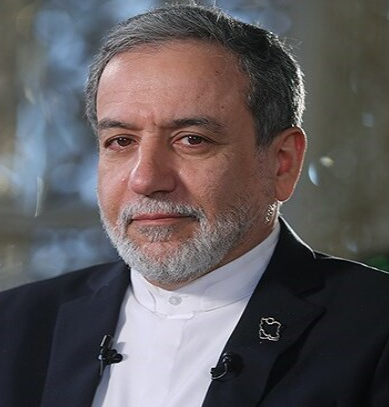
Against that backdrop, the measured, disciplined and lawyerly tone of Abbas Araghchi, Iran’s foreign minister, coupled with his calm, saintly demeanour emerged as the only semblance of sanity during an increasingly hostile five weeks as the world inched towards an all out war.
. In a war shaped by spectacle, he became the face of Iran not because he was the loudest man in the room, but because he appeared to be the calmest.
The contrast, which made all the difference in how the world saw Iran, matters because Araghchi is not an accidental spokesman elevated by crisis. He is a product of the Islamic Republic’s diplomatic institutions, a veteran negotiator who has spent decades moving between embassies, policy schools, nuclear talks and the upper reaches of Iran’s foreign-policy establishment.
A close look at his career graph helps explain why, in the middle of a war that threatened to redraw the strategic map of West Asia, Tehran placed him so firmly at the centre of its international messaging.
Early Career
Araghchi was born in Tehran in 1962 and came of age during the revolutionary upheavals that remade Iran. According to several accounts, he participated in the 1979 revolution as a teenager and then served in the Islamic Revolutionary Guard Corps, fighting in the Iran-Iraq War during his youth. Those experiences are important to understanding the dual quality that has long marked his public persona: he is at once an establishment insider shaped by war, and a diplomat who learned to translate the ideological language of the Islamic Republic into the idiom of negotiations, communiqués and strategic ambiguity.
His formal training moved in parallel with that political formation.
Araghchi first studied international relations at the School of International Relations affiliated with Iran’s foreign ministry, then completed a master’s degree in political science at Islamic Azad University in Tehran, before earning a Ph.D. from the University of Kent in England in 1996. His doctoral work examined political participation in twentieth-century Islamic political thought, a subject that sits neatly at the intersection of theology, statecraft and political legitimacy. Even his academic profile, in other words, foreshadowed the career that followed: a diplomat preoccupied with how modern political systems justify power, mobilise sovereignty and negotiate competing claims of law and authority.
If Araghchi’s education gave him the grammar of statecraft, the foreign ministry gave him its practice. Iran’s official record shows that he entered the ministry in 1989 and worked through a sequence of increasingly sensitive positions: first in international affairs, then in divisions dealing with Islamic, regional and non-aligned organisations, and later as the caretaker of Iran’s representation to the Organisation of the Islamic Conference in Jeddah. By the late 1990s he was leading the Persian Gulf Studies Center and then directing the Institute for Political and International Studies, one of the country’s important policy-research institutions.
| Who was Araghchi | |
| Full name | Seyyed Abbas Araghchi |
| Born | 5 December 1962, Tehran, Iran |
| Current post | Minister of Foreign Affairs of Iran since 21 August 2024 |
| Academic qualification | Ph.D. in Political Sciences / political thought, University of Kent, 1996 |
| Signature diplomatic role | Chief nuclear negotiator from 2013 to 2021 |
| Major overseas postings | Ambassador to Finland and accredited ambassador to Estonia; later ambassador to Japan |
| Languages | Persian, Arabic and English |
His diplomatic rise was steady rather than theatrical. He served as ambassador to Finland and, with dual accreditation, to Estonia, before later becoming ambassador to Japan. He was dean of the School of International Relations, foreign ministry spokesperson, deputy minister in multiple portfolios, and eventually political deputy at the ministry.
What stands out in this trajectory is not simply longevity, but versatility. Araghchi was not confined to one theatre or one file. He moved across Europe, Asia, legal affairs, political affairs, institutional management and public communication, accumulating the kind of bureaucratic credibility that matters greatly in a system like that of Iran.
Yet the role that defined him beyond Iran’s borders was the nuclear file. From September 2013 to September 2021, according to the foreign ministry, Araghchi served as chief nuclear negotiator. He was one of the key Iranian officials involved in the long and technically dense talks with the P5+1 that culminated in the 2015 Joint Comprehensive Plan of Action. Those negotiations introduced him to global audiences as a figure capable of mixing ideological steadfastness with procedural precision. He could sound unyielding on principle while remaining highly fluent in the give-and-take of diplomacy.
That paradox is central to his public image. Araghchi is often described as a hard-line or system-loyal figure, and there is abundant evidence in his writings and official positions that he is deeply rooted in the worldview of the Islamic Republic. At the same time, his career demonstrates repeated engagement with the very forms of international bargaining that ideological states sometimes claim to distrust. This is one reason he has been so useful to Tehran: he can speak the language of resistance and the language of negotiation without appearing, in either register, to betray the other.
His official biography reinforces that impression. It presents not merely a diplomat, but a scholar-bureaucrat: an associate professor, a former editor of the Foreign Policy Journal, and the author of books and articles on water diplomacy, cyberspace, terrorism, regional security, China-U.S. relations, and the JCPOA. Among the books listed in his official profile are A Sealed Secret: The JCPOA, The Power of Negotiation, and works on transboundary water diplomacy and the Middle East. This body of writing matters because it suggests that Araghchi has long seen diplomacy not as episodic crisis management but as an intellectual field in its own right—something to be theorised, taught and institutionalised.
By the time President Masoud Pezeshkian nominated him as foreign minister in August 2024, Araghchi was therefore already both familiar and reassuring to Iran’s governing establishment. His appointment signalled continuity, experience and a preference for a seasoned hand at a moment when Iran’s external environment was becoming more volatile. Within months, that judgment would be tested by war.
| Career phase | Position and significance |
| 1989–1993 | Entered the foreign ministry and worked on international, Islamic and regional affairs, building expertise in multilateral diplomacy. |
| 1990s | Helped establish Iran’s representation at the Organisation of the Islamic Conference in Jeddah and later led policy research institutions in Tehran. |
| 1999–2003 | Served as ambassador to Finland with accreditation to Estonia, giving him a European diplomatic profile. |
| 2004–2005 | Dean of the School of International Relations, indicating his stature inside the ministry’s intellectual establishment. |
| 2005–2008 | Deputy foreign minister for legal and international affairs. |
| 2008–2011 | Ambassador to Japan, one of Iran’s most important Asian diplomatic assignments. |
| 2011–2013 | Deputy for Asia-Pacific and Commonwealth affairs; also served as foreign ministry spokesperson. |
| 2013–2021 | Deputy foreign minister and chief nuclear negotiator, the role that made him internationally visible. |
| 2021–2024 | Adviser to the foreign minister and secretary of the Strategic Council on Foreign Relations. |
| Since 21 Aug. 2024 | Minister of Foreign Affairs under President Masoud Pezeshkian. |
The conflict that began on 28 February 2026 transformed Araghchi from a known diplomatic actor into a global wartime presence. He appears again and again as the principal civilian voice of Iran’s response. After the U.S.-Israeli strikes, he condemned the attacks as unlawful and defended Iran’s right to respond. AP later reported him saying on Iranian state television that Tehran had not engaged in talks to end the war and did not plan negotiations at that moment. Yet Al Jazeera’s subsequent reporting showed that he was simultaneously maintaining channels of communication, confirming direct contact with Steve Witkoff, President Trump’s envoy, even while insisting that such exchanges did not amount to negotiations.
This is where Araghchi’s temperament became politically significant. He was not a dove; his language was often severe. He spoke of zero trust in Washington, defended Iran’s right to close the Strait of Hormuz to enemies during wartime, and warned that Iran was ready for any ground invasion. But he articulated all this with a composure that contrasted sharply with the rhetorical volatility elsewhere. AP reported Netanyahu declaring that Iran could no longer enrich uranium or build ballistic missiles, reflecting sweeping war aims. The same outlet quoted Trump invoking Pearl Harbor while justifying the surprise nature of the attack, and publicly oscillating between coordination with Israel and attempts to show distance from some of its actions. Another AP report quoted Hegseth describing a “decisive mission” to destroy Iran’s missile threat, wreck its navy and ensure “no nukes,” while warning that more casualties were likely and refusing to say how far Washington might go.
It would be simplistic to turn that contrast into a morality play. Araghchi is not an independent liberal dissenter inside the Iranian system; he is one of its most polished representatives. He has defended the state’s positions on deeply controversial issues, and his rhetoric can be uncompromising. But biography is often illuminated by style as much as ideology. In this war, style became substance. While others projected fury, bravado or escalation, Araghchi projected control. To the rest of the world, that made him the voice of national steadiness. To critics, it made him a highly effective advocate for a regime under extreme pressure. In either case, he became indispensable to understanding how Iran wished to be seen.
There is also a deeper continuity here between the negotiator of the nuclear years and the wartime foreign minister of 2026. Araghchi’s public method has long depended on preserving room for manoeuvre. He rarely sounds impulsive. He prefers formulations that are stern but conditional, emphatic but not reckless. That habit was visible in the nuclear negotiations; it remained visible in war. Even when he rejected the language of talks, he did not sever communication. Even when he warned of retaliation, he continued to describe waterways, sovereignty and mediation in legal-diplomatic terms.
In that sense, Araghchi’s is really the story of a particular type of Iranian statecraft. He belongs to a generation shaped by revolution and war, educated in both Iranian and British institutions, disciplined by bureaucracy, and elevated by the Islamic Republic because he can reconcile ideological loyalty with diplomatic fluency.
He is neither merely a technocrat nor merely a propagandist. He is something more consequential: a state diplomat formed to operate in crises where legitimacy, survival and negotiation overlap. That is why the war of 2026 made him newly legible to the world.
Abbas Araghchi did not become the face of Iran because he softened the republic’s message. He became its face because he gave that message form, discipline and coherence at a moment when the region was sliding toward catastrophe. In a conflict crowded with men performing rage, he stood out by performing control. And in modern diplomacy, especially in wartime, that also transforms is a form of power.
References:
Iranian Foreign Ministry biography (https://en.mfa.ir/portal/organizationpersoninfo/13756) Official career chronology, education, publications
Wikipedia entry on Abbas Araghchi (https://en.wikipedia.org/wiki/Abbas_Araghchi) Cross-check for early life, education, language skills, family background, awards
AP report, March 25, 2026 (https://apnews.com/article/iran-us-israel-trump-lebanon-march-25-2026-e07c54139bcc70672bb33f0773ede6a) Araghchi statement on negotiations during war
AP live coverage, March 19, 2026 (https://apnews.com/live/iran-war-israel-trump-03-19-2026) Netanyahu and Trump rhetoric, war objectives, tone contrast
AP report on Hegseth, March 2, 2026 (https://apnews.com/article/trump-iran-caine-hegseth-85f4139b11e5191d880a6e114e1b5a62) Hegseth’s framing of war aims and escalation
Al Jazeera analysis, April 1, 2026 (https://www.aljazeera.com/news/2026/4/1/war-on-iran-three-key-takeaways-from-araghchis-interview-with-al-jazeera) Araghchi’s wartime messaging, contact with Witkoff, Strait of Hormuz, strategic tone