What the Fund is saying now, and how its forecasts have held up in recent years
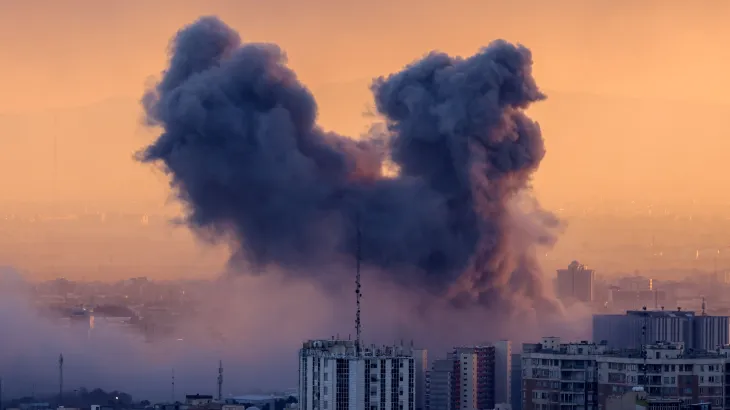
The International Monetary Fund’s latest warning about the economic impact of the Iran war deserves attention not only because of what it says about the next few quarters, but also because of what it reveals about the limits of global forecasting in an era of repeated geopolitical shocks. The IMF’s April 2026 World Economic Outlook says the conflict has worsened the world growth outlook by pushing up commodity prices, reviving inflation pressures, and tightening financial conditions.1 Reuters reported that, under the IMF’s central assumption of a conflict that remains limited in duration and scope, the Fund cut its 2026 global growth forecast to 3.1 percent, down from 3.3 percent in January, and warned that a deeper or longer war could push the world economy to the brink of recession.2 AP likewise reported that the downgrade was directly linked to the war’s fallout, especially through energy prices and inflation.3
The important background is that this was not how the IMF expected 2026 to begin. In its official blog, the Fund said that before the conflict escalated it had been preparing a modest upgrade to the global outlook, with momentum from late 2025 expected to carry into 2026.4 Instead, the war has forced a sharp reassessment. IMF materials indicate that global inflation is now expected to rise from 4.1 percent in 2025 to 4.4 percent in 2026, marking a significant interruption in the disinflation story that had defined much of the post-pandemic recovery.1 4
The current IMF warning in context
The IMF’s argument is straightforward. A war involving a major energy-producing region does not remain a regional economic event for long. It works through oil and gas prices, transport costs, insurance costs, confidence, and the financing conditions facing already strained governments and companies. That is why the Fund’s latest warning goes beyond a standard revision to a growth table. It is effectively saying that the world economy was already operating with thin margins of safety, and that the war has exposed how vulnerable the apparent soft landing really was.1 2
That point matters because the IMF is not merely predicting slower growth; it is also warning that inflation may re-accelerate at the same time, creating a more difficult policy mix for central banks and finance ministries. Slower growth on its own is manageable. Slower growth combined with a renewed inflation pulse is much harder, because policymakers then face a narrower set of choices: support demand and risk higher prices, or keep policy tight and risk weaker output.1 3
How IMF forecasts have performed in recent years
The best way to understand the significance of the new warning is to look at the IMF’s recent forecasting record. Over the last few years, the Fund has often been directionally right about the broad trend, but the exact numbers have repeatedly been knocked off course by events that no baseline model could fully absorb in advance.
| Forecast round | What the IMF projected at the time | What happened later | What that says about the IMF’s track record |
| January 2023 WEO Update | The IMF projected 2.9% global growth in 2023 and 3.1% in 2024. It expected inflation to fall from 8.8% in 2022 to 6.6% in 2023 and 4.3% in 2024.5 | By April 2024, the IMF estimated that the world economy had actually grown 3.2% in 2023, stronger than the January 2023 forecast.6 Supply chains healed faster than feared, labor markets remained resilient, and the United States in particular outperformed many expectations.6 | The IMF was too pessimistic on growth, but broadly right that inflation would come down and that the post-pandemic boom would normalize. |
| January 2024 WEO Update | The Fund projected 3.1% global growth in 2024 and 3.2% in 2025, while forecasting headline inflation of 5.8% in 2024 and 4.4% in 2025.7 | The basic soft-landing view broadly held through 2024. By July 2024, the IMF was still projecting 3.2% growth in 2024 and had edged 2025 up to 3.3%.8 | The IMF’s early-2024 baseline was reasonably good. It captured the central fact that the global economy was slowing, but not collapsing. |
| January 2025 WEO Update | The IMF projected 3.3% growth in both 2025 and 2026, with global inflation falling to 4.2% in 2025 and 3.5% in 2026.9 | That baseline was soon disrupted. Reuters reported that by April 2025 the IMF had cut global growth to 2.8% for 2025 and 3.0% for 2026, citing the shock from sharply higher U.S. tariffs and policy uncertainty.10 By July 2025, the IMF revised growth modestly higher to 3.0% in 2025 and 3.1% in 2026, while saying inflation would decline to 4.2% in 2025 and 3.6% in 2026.8 By January 2026, Reuters reported that the Fund again saw 3.3% growth in 2026, helped by stronger 2025 performance and AI-led investment momentum.11 | This was the clearest case of the IMF baseline being overrun by politics and shocks. Tariffs altered the 2025 trajectory, and war then altered the 2026 one. |
| April 2026 WEO | The Fund now projects 3.1% global growth in 2026 and says inflation will rise, not fall, in 2026.1 2 | The outlook has been darkened by a war-driven energy and confidence shock before the earlier disinflation process had fully finished.1 4 | The IMF’s latest warning is consistent with its recent pattern: baselines are usable, but they are fragile when geopolitics changes suddenly. |
The broad historical picture is that the IMF has been better at identifying the direction of risk than the exact scale of the outcome. In early 2023, it was too gloomy about growth, because the world economy still had more resilience than many forecasters appreciated. Consumers continued spending, labour markets remained stronger than expected, and the feared slump from tighter monetary policy was milder than many thought.5 6
In early 2024, the Fund’s argument that a soft landing was possible turned out to be broadly defensible. Growth stayed steady rather than strong, but that was enough to validate the central narrative. Inflation continued to ease, even if not as quickly or as cleanly as policymakers would have preferred. In that sense, 2024 was a relatively good year for IMF-style forecasting: the baseline held because the world did not suffer a major new systemic shock.7 8
The real break came in 2025. At the start of that year, the IMF was still telling a familiar story of continued moderate growth and continued disinflation. That baseline did not survive contact with policy and geopolitics. The tariff shock forced a sharp downward revision in April 2025, and although some of that damage was later moderated, the year showed how vulnerable the global outlook had become to political decisions rather than purely economic forces.9 10
The latest war warning fits that pattern. The IMF is now effectively saying that the world economy entered 2026 with less cushion than it appeared to have. A new supply-side shock, especially one linked to energy, can still quickly undo the progress made on inflation while also cutting into growth. That is what makes the current warning more than a routine forecast adjustment. It is an admission that the global system remains shock-prone, energy-sensitive, and geopolitically exposed.1 2 4
What the IMF got right, and where it missed
The fairest assessment is that the IMF has generally got three things right. First, it has repeatedly identified the major channels of danger: geopolitical conflict, commodity-price spikes, trade fragmentation, and policy uncertainty.4 5 7 9 Second, it has been broadly correct that the world economy since 2023 has been neither booming nor collapsing, but instead moving through a weaker, uneven, and more shock-sensitive expansion.6 8 Third, it has consistently recognized that inflation would come down from the post-pandemic peaks, even if the process would be bumpy.5 7 8 9
Where it has missed is in the precision and durability of the baseline. The IMF underestimated global resilience in 2023. It then had to revise the 2025 outlook sharply lower because of tariffs, and the 2026 outlook lower because of war. In other words, the institution has not failed because it cannot do arithmetic. It has struggled because the modern global economy is being pushed around by political shocks that standard forecasting frameworks can describe, but not time perfectly.10 11 2
References
[1]IMF: World Economic Outlook, April 2026
[2] Reuters: IMF cuts growth outlook, warns of potential global recession if Iran war worsens
[3] AP: The IMF cuts the outlook for global growth in the fallout from the Iran war
[4] IMF Blog: War Darkens Global Economic Outlook and Reshapes Policy Priorities
[5] IMF: World Economic Outlook Update, January 2023
[6] IMF: World Economic Outlook, April 2024
[7] IMF: World Economic Outlook Update, January 2024
[8] IMF: World Economic Outlook Update, July 2025
[9] IMF: World Economic Outlook Update, January 2025
[10] Reuters: IMF cuts growth forecasts for most countries in wake of century-high U.S. tariffs
[11] Reuters: IMF sees steady global growth in 2026 as AI boom offsets trade headwinds