Long before it carried oil super-tankers, the Strait of Hormuz carried empire. The world now knows it as the narrow maritime gate through which Gulf crude, LNG and global anxiety must pass. But centuries before energy traders began watching tanker maps, rulers, merchants, pirates, admirals and imperial agents understood the same hard truth: whoever could command this slice of water could tax, threaten, protect, or interrupt the traffic between the Gulf and the wider Indian Ocean.
That is why the Strait of Hormuz has never really been just geography. It has always been a business model, a military temptation, and a political message.
The story of Hormuz begins in the early modern world, when the waterway was already a toll booth for global trade. In 1507, the Portuguese arrived in force, captured Hormuz, built a fortress and a customs house, and turned the island into an imperial checkpoint for ships moving silk, spices, pearls and Arabian horses.
The historian Rudolph Matthee notes that Portuguese authorities issued cartazas—paid permissions to trade in the Persian Gulf—effectively monetising movement itself.1 In other words, one of the earliest modern lessons of Hormuz was simple: control the chokepoint, and commerce starts paying rent.
“Portuguese authorities issued ‘cartazas,’ as they called them—paid permission to trade in the Persian Gulf.” — historian Rudolph Matthee, quoted by HISTORY”
For about a century, that system enriched Portugal and embittered many of those forced to live under it. The Portuguese presence at Hormuz was not merely naval pageantry; it was an attempt to weld military power to customs collection. The fortress mattered because the trade mattered. Hormuz sat where merchants and monarchs could be made to feel the cost of passage.
But the strait also taught a second lesson that remains true today: chokepoints invite counter-coalitions. By 1622, the Portuguese were expelled by an alliance between Shah Abbas I of Safavid Persia and the English East India Company, which supplied naval muscle in exchange for commercial advantage.1 Even then, Hormuz was a place where trade and war met each other halfway. Naval force opened the door; business interests decided who walked through it.
| Historical moment | What happened | Why it mattered |
| 1507 | Portuguese seize Hormuz and establish a fortress and customs post1 | Control of passage became a source of revenue and imperial power |
| 1622 | Safavid Persia and the English East India Company expel the Portuguese1 | The strait becomes proof that trade interests can reorder military alliances |
| 1980s | Iran mines the strait and attacks shipping during the Tanker War2 | Modern energy markets discover how quickly a regional war can threaten global supply |
| 2019 | Tanker attacks and seizures revive fears over navigation and maritime law3 | Hormuz re-emerges as a pressure point in the U.S.-Iran confrontation |
| 2026 | Conflict again pushes the strait toward closure and coercion2 4 | The old chokepoint resumes its role as a test of global resilience |
The modern age changed the cargo, but not the logic. Oil replaced spices; LNG replaced pearls; tanker-tracking software replaced lookout towers. Yet the strait remained what it had always been: a narrow corridor through which vastly disproportionate wealth must move. The U.S. Energy Information Administration says 20.9 million barrels a day of oil and 11.4 billion cubic feet a day of LNG passed through Hormuz in the first half of 2025.4 Those are contemporary numbers, but they describe an old condition. Hormuz matters because too much value is forced through too little space.
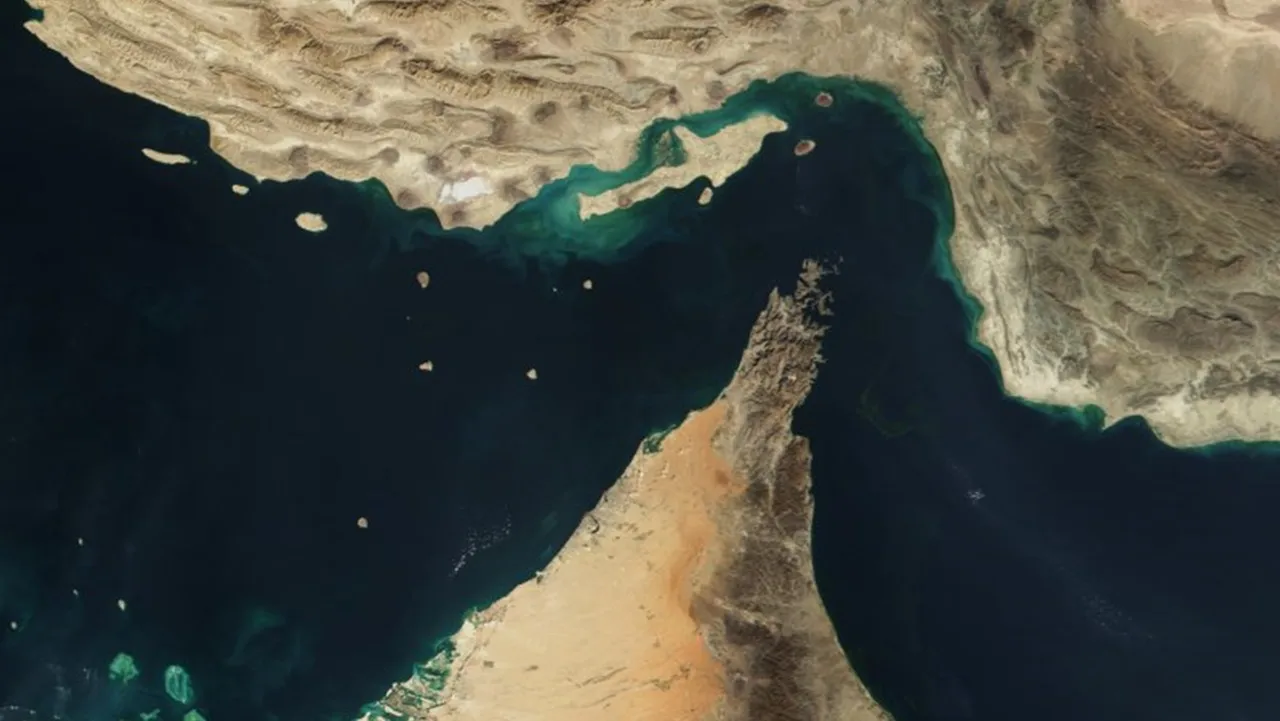
The geography itself reads like a warning label. According to the Congressional Research Service, the strait is only 22 nautical miles wide at its narrowest point, with two shipping lanes just two miles wide each and a two-mile buffer between them.2 That narrowness has always made it uniquely suited to coercion. In the sixteenth century, cannon and fort walls could do the job. In the twentieth and twenty-first centuries, mines, missiles, armed speedboats, drones and tanker seizures can do it faster.
The most important modern precedent came during the Iran-Iraq War, when the Gulf became the scene of the so-called Tanker War. CRS notes that Iran mined the strait in the 1980s and that U.S. military operations in 1987-88 were mounted to counter Iranian threats to international shipping.2 This was the moment when Hormuz ceased to be merely a strategic concern for diplomats and became a recurring nightmare for energy economists. The world realised that one of its central oil arteries sat beside an active battlefield.
By then, the symbolism of Hormuz had changed. It was no longer simply a place where empires taxed commerce. It had become a place where states signalled endurance and defiance. Threatening the strait was a way of telling rivals that the costs of pressure would not remain local. Close enough to frighten traders, but not always fully close enough to provoke total war, Hormuz became a theatre of calibrated instability.
That pattern resurfaced in 2019, when tanker attacks and seizures around the strait revived legal and strategic debates over freedom of navigation, maritime security and the use of force. Scholars writing on those incidents point out that Hormuz is unusual not only because it is vital, but because it sits at the intersection of commercial law, military strategy and political theatre. A tanker there is never only a tanker. It is also a floating signal, a vulnerable asset, a diplomatic message and, at times, a hostage to larger contests.
If this history gives the strait a tragic rhythm, it is because every era rediscovers the same imbalance. Global trade wants predictability. Regional rivals seek leverage. Hormuz offers both opportunity and temptation. The Portuguese collected tolls. Safavid Persia reclaimed authority. Imperial companies bargained for commercial privileges. Revolutionary Iran learned that even the threat of disrupting passage could echo through world markets. And the contemporary world, for all its satellites and strategic reserves, remains vulnerable to a waterway small enough to fit inside a single sentence.
There is also something almost medieval about the strait’s persistence. The names and cargoes change, but the choreography does not. Forts become naval bases. Tribute becomes insurance. Convoys become escorted tanker traffic. Customs houses become sanctions regimes. Yet the same question shadows every century: who gets to decide what passes through Hormuz, and at what cost?
That is why Hormuz is not merely a flashpoint; it is a historical mirror. Look into it closely enough and the centuries begin to overlap. Sixteenth-century toll collectors, seventeenth-century imperial bargains, Cold War convoy logic, and today’s drone-and-missile brinkmanship all belong to one long story. The Strait of Hormuz is the place where trade has repeatedly met force, and where the world keeps relearning that prosperity can depend on the peace of a very narrow sea.
References
HISTORY: The Strait of Hormuz: A Timeline of Tensions
U.S. Energy Information Administration: World Oil Transit Chokepoints