On the night of May 6-7, 2025, when the Indian Armed Forces launched “Operation Sindoor,” a series of precision strikes deep inside Pakistan and Pakistan-occupied Jammu and Kashmir (POJK) [1], the geopolitical tectonic plates of South Asia shifted rather violently.
Triggered by the devastating Pahalgam terror attack on April 22, 2025, which claimed the lives of 26 innocent tourists, the operation marked a definitive end to India’s era of strategic restraint [2].
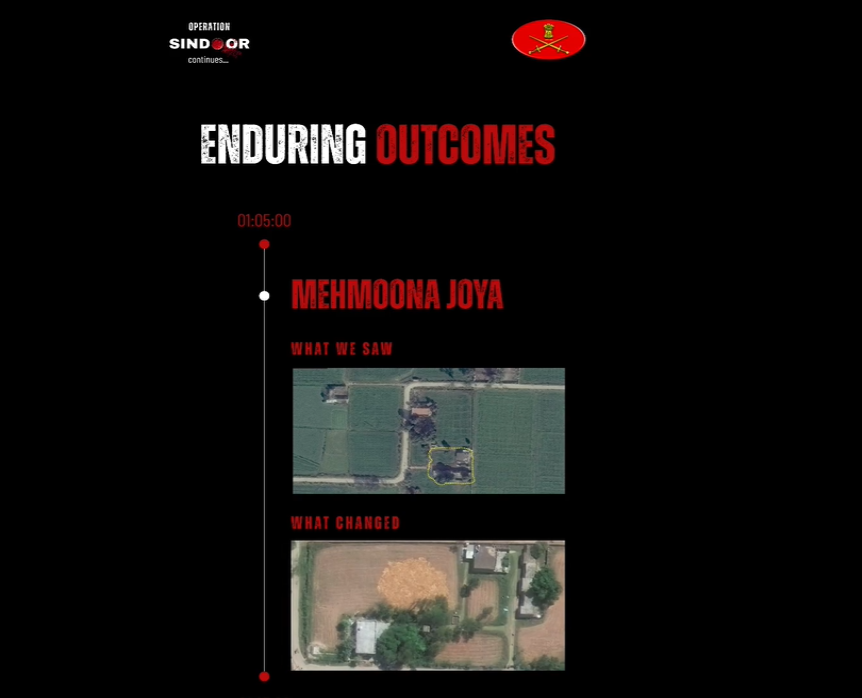
Today, as the first anniversary of Operation Sindoor approaches, the Indian Army has released satellite imagery confirming the destruction of seven major terror camps, including Kotli Abbas, Syedna Bilal, and Sawai Nala [3].
Yet, the true legacy of those four days in May extends far beyond the cratered terrorist infrastructure. Operation Sindoor established a new doctrine of “escalation dominance,” fundamentally altering the military balance between India and Pakistan, even as the broader region grapples with the economic fallout of the ongoing US-Iran war [4].
The Doctrine of Escalation Dominance
For decades, Pakistan’s military strategy relied on a perceived nuclear umbrella to shield its proxy warfare tactics. The assumption was that India would not risk conventional military retaliation for fear of triggering a nuclear exchange. Operation Sindoor shattered this paradigm.
By utilizing advanced missiles and loitering munitions to strike not only terror camps but also Pakistani military installations—including the Ghulni military base, Nur Khan airbase in Rawalpindi, and the 12th Corps headquarters in Quetta—India demonstrated its willingness and capability to climb the escalation ladder [3]. When Pakistan attempted retaliatory strikes, they were “effectively neutralised” by India’s robust air defense systems [3].
This approach, formalized in India’s new National Counter-Terrorism Policy and Strategy (PRAHAAR) released in February 2026, codifies “escalation dominance” [5]. It signals that India possesses the superior resources and technological edge to control the pace, intensity, and outcome of a conflict at every level below the nuclear threshold [4]. “Operation Sindoor demonstrated India’s ability to strike targets deep within Pakistan—be it terror camps, drone hubs, airbases, or air defence systems,” noted a recent analysis by the British American Security Information Council [6]. The message to Islamabad was clear: the cost of sponsoring cross-border terrorism will now be extracted directly from the Pakistani military establishment.
The Military Balance in 2026
A year after the conflict, the military asymmetry between the two nations has only widened, though Pakistan is aggressively attempting to close the qualitative gap through its “all-weather” alliance with China.
In the 2026 global military strength rankings, India holds the position of the world’s 4th strongest military, maintaining a significant conventional advantage over Pakistan [7]. This superiority is most pronounced in the air and at sea. The Indian Air Force operates 2,217 aircraft, including 588 combat jets, compared to Pakistan’s 1,369 aircraft and 469 fighters [8].
However, Pakistan is not standing still. Recognizing the “velocity gap” exposed during Operation Sindoor, Islamabad has accelerated its military modernization, focusing heavily on network-centric warfare and multi-domain operations [9]. The most significant development occurred just days ago, on April 30, 2026, when the Pakistan Navy commissioned its first Chinese-built Hangor-class submarine [10]. This acquisition marks a critical step in Pakistan’s naval modernization, designed to challenge India’s dominance in the Indian Ocean and secure sea lines of communication [11].
| Military Domain | India’s 2026 Posture | Pakistan’s 2026 Posture |
| Air Power | Numerical superiority; integration of advanced Israeli drone technology; focus on long-range precision strike capabilities. | Upgrading existing fleets with US F-16 radar support; increasing reliance on Chinese fighter platforms (JF-17, J-10C). |
| Naval Power | 296-ship navy; recent successful tests of long-range hypersonic anti-ship missiles (May 2026). | Commissioning of Hangor-class submarines (April 2026) to implement sea-denial strategies. |
| Strategic Doctrine | “Escalation Dominance” and proactive counter-terrorism (PRAHAAR); preparing for a potential two-front war (China and Pakistan). | Maintaining strategic parity through nuclear deterrence; leveraging Chinese military technology to offset conventional disadvantages. |
Despite these conventional shifts, the ultimate constraint remains the nuclear shadow. Both nations possess formidable nuclear arsenals, which continue to act as the final backstop against total war. Yet, as Operation Sindoor proved, there is significant room for conventional military action below that threshold.
Shadow of the US-Iran War
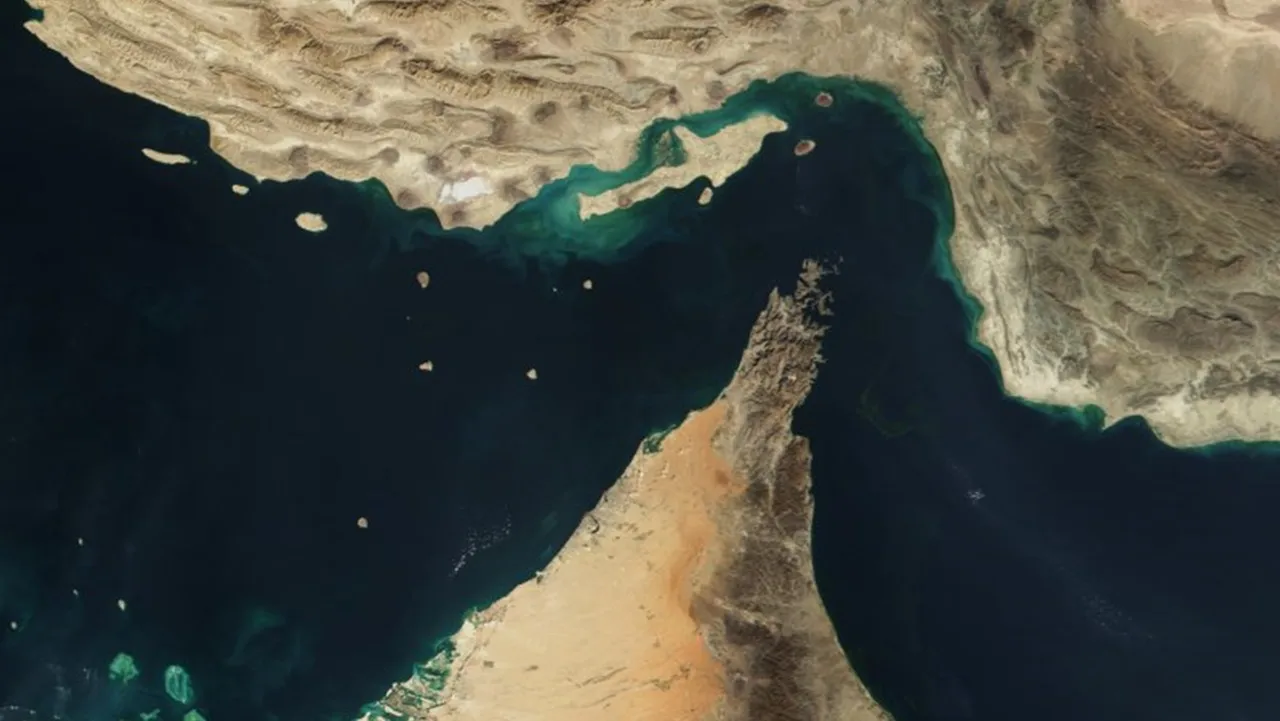
While India and Pakistan navigate their bilateral hostility, both nations find themselves uniquely vulnerable to a conflict they have no part in: the ongoing US-Iran war. The disruption of maritime traffic in the Strait of Hormuz—a vital artery that carries nearly a fifth of global oil flows and a substantial share of LNG and fertilizer trade—has hammered South Asian economies [12].
For India, the economic impact is severe. The country requires 17 million tons of urea by August 2026, but faces a shortfall of roughly 2 million tons [12]. Filling this gap at inflated wartime prices means a higher import bill, a weaker rupee, and a fertilizer subsidy heading toward a staggering $18 billion [12]. Furthermore, the repatriation of over 220,000 Indian workers from the Gulf threatens the $51 billion in annual remittances that India relies upon [12].
Pakistan’s situation is arguably more precarious. Bound by strict IMF constraints, the government in Islamabad cannot subsidize fuel prices, forcing it to pass the rising costs directly to consumers [12]. This has triggered public outcry, smart lockdowns, and frequent power outages as the state struggles to afford imported fuel [12].
Ironically, the US-Iran conflict has created a bizarre diplomatic inversion. Pakistan, despite its economic fragility, has emerged as an unlikely peace mediator. Army Chief Gen Asim Munir recently visited Tehran to convey messages from Washington, while Prime Minister Shehbaz Sharif has toured Saudi Arabia, Qatar, and Turkey seeking a diplomatic off-ramp [12].
Conversely, India, despite its economic heft, finds its diplomatic leverage limited by its increasingly close ties with Israel. Just days before the US-Iran war began, New Delhi and Tel Aviv elevated their relationship to a “Special Strategic Partnership” [12]. While this provides India with unique access to Israeli decision-makers, it complicates its ability to mediate with Tehran.
A Fragile Future
As the first anniversary of Operation Sindoor passes, the subcontinent remains locked in a state of hostile indifference. The ceasefire agreed upon on May 10, 2025, holds, but it is a cold peace. There is no meaningful diplomatic dialogue between New Delhi and Islamabad; they are, as one analyst described, “neighbours who do not talk to each other” [13].
For India, the strategic focus has definitively shifted. Pakistan is no longer the organizing principle of Indian foreign policy; that role has been assumed by China [14]. Operation Sindoor was, in many ways, an attempt to permanently manage the western border so that India could focus its resources on the eastern threat.
Yet, the two-front threat remains a reality. As Pakistan deepens its military integration with China—exemplified by the Hangor-class submarines—the distinction between the two fronts blurs. A US-based think tank recently warned that the India-Pakistan conflict could reignite in 2026 [15]. Operation Sindoor proved that India has the will and the capability to strike decisively. But as the economic tremors of the US-Iran war demonstrate, military dominance alone cannot insulate a nation from the chaotic realities of a deeply interconnected and volatile world.
References
[1] Press Information Bureau, Government of India. “operation sindoor : indian armed forces carried out…” May 7, 2025. https://www.pib.gov.in/PressReleasePage.aspx?PRID=2127370 [2] Institute of South Asian Studies, National University of Singapore. “India’s New Counter-terror Doctrine: Coping with Nuclear Impunity.” May 14, 2025. https://www.isas.nus.edu.sg/papers/indias-new-counter-terror-doctrine-coping-with-nuclear-impunity/ [3] The Times of India. “On Sindoor eve, Army releases list, satellite images of 7 Pakistan terror camps destroyed; Rajnath commends valour of soldiers.” May 3, 2026. https://timesofindia.indiatimes.com/defence/news/on-sindoor-eve-army-releases-list-satellite-images-of-7-pakistan-terror-camps-destroyed-rajnath-commends-valour-of-soldiers/articleshow/130726143.cms [4] Global Security Review. “India’s Strategy of Escalation Dominance.” October 27, 2025. https://globalsecurityreview.com/indias-strategy-of-escalation-dominance/ [5] Ministry of Home Affairs, Government of India. “NATIONAL COUNTER-TERRORISM POLICY & STRATEGY.” February 23, 2026. https://www.mha.gov.in/sites/default/files/PRAHAAREng_23022026.pdf [6] British American Security Information Council. “Operation Sindoor Establishes India’s New Response Doctrine Towards Pakistan.” May 21, 2025. https://basicint.org/operation-sindoor-establishes-indias-new-response-doctrine-towards-pakistan/ [7] Military Compare. “India vs Pakistan Military Strength Comparison 2026.” https://militarycompare.com/india-vs-pakistan-military-strength-comparison-2025/ [8] Global Military. “India vs Pakistan Military Comparison 2026.” https://www.globalmilitary.net/compare/countries/ind-vs-pak/ [9] War on the Rocks. “The Velocity Gap Between Pakistan and India.” March 4, 2026. https://warontherocks.com/the-velocity-gap-between-pakistan-and-india/ [10] The Washington Post. “Pakistan commissions first Hangor-class submarine in China.” April 30, 2026. https://www.washingtonpost.com/world/2026/04/30/pakistan-navy-china-submarine/4f0b1e44-448e-11f1-b19d-32431046b5b4_story.html [11] Asia Times. “Pakistan’s Hangor subs tighten China link, test India at sea.” May 1, 2026. https://asiatimes.com/2026/05/pakistans-hangor-subs-tighten-china-link-test-india-at-sea/ [12] The Diplomat. “The Iran War’s Impact on India and Pakistan.” April 17, 2026. https://thediplomat.com/2026/04/the-iran-wars-impact-on-india-and-pakistan/ [13] The India Forum. “India and Pakistan: Neighbours Who Do Not Talk to Each Other.” April 10, 2026. https://www.theindiaforum.in/politics/india-and-pakistan-neighbours-who-do-not-talk-each-other [14] The Diplomat. “From Rivalry to Indifference: India’s New Pakistan Strategy.” February 12, 2026. https://thediplomat.com/2026/02/from-rivalry-to-indifference-indias-new-pakistan-strategy/ [15] NDTV Profit. “India-Pakistan Conflict May Reignite In 2026, Warns US-Based Think Tank.” December 30, 2025. https://www.ndtvprofit.com/india/india-pakistan-conflict-may-reignite-in-2026-warns-us-based-think-tank-10103686