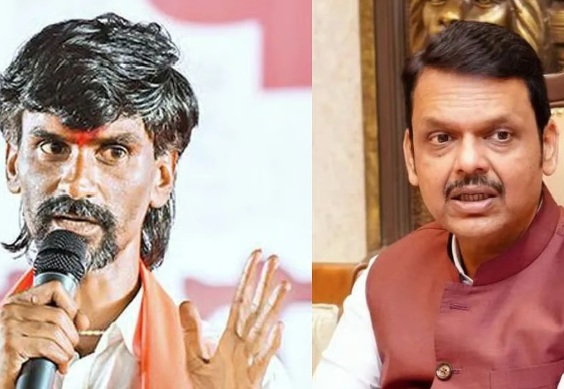
At about 11 a.m. on 15 September, Manoj Jarange-Patil was reported to have left Antarwali Sarati in Jalna district and begun the journey towards Mumbai. His destination was Azad Maidan. His stated plan was an indefinite hunger strike, principally from 19 September, to press the demand that eligible Marathas be recognised through the Kunbi route and receive access to the existing Other Backward Classes (OBC) reservation system. 1 3 7 11
The journey began under a cloud of uncertainty. Mumbai Police had refused permission for the proposed fast. The Bombay High Court had declined to stop the march in advance, but it had not granted a permit. The Court’s position was narrower and more conditional: a protest could not be prohibited merely on apprehension, but any gathering had to comply with the applicable rules and could be regulated if a concrete public-safety or law-and-order problem emerged. 2 8 9 10
That distinction—between the right to protest and permission for a particular protest—is central to the story. So is another distinction: between movement toward Mumbai and arrival at Azad Maidan, between a proposed hunger strike and a fast that has actually begun, and between a political demand and a constitutional entitlement.
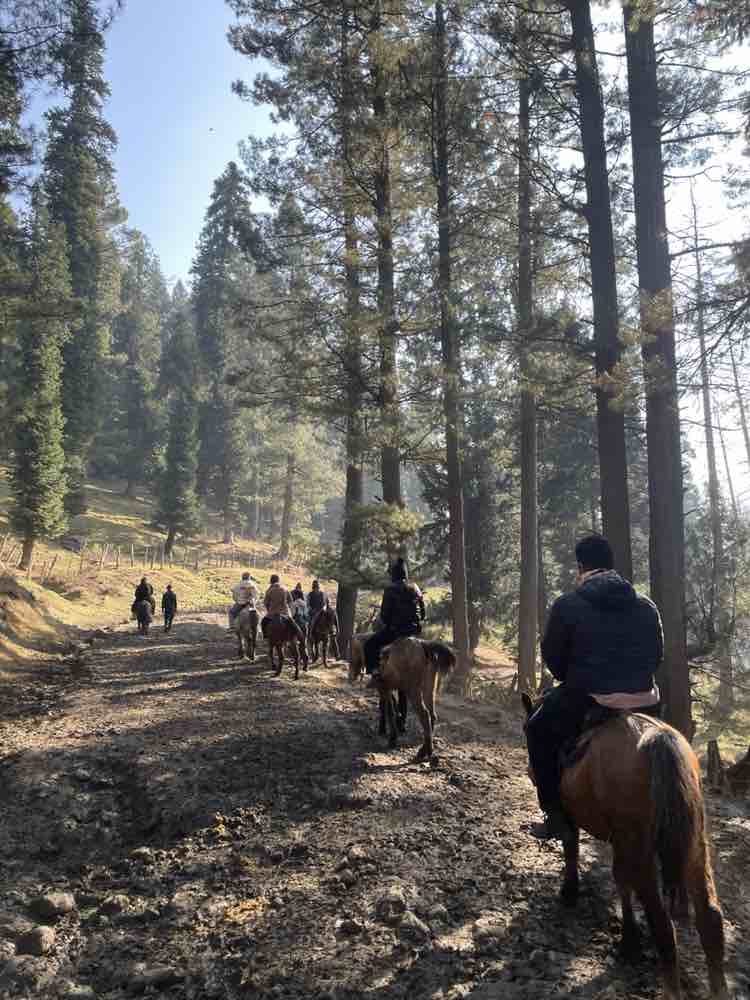
The route reported by The Indian Express ran from Antarwali Sarati to a first halt in Beed district, described in some accounts as Patoda; then to Shrigonda in Ahilyanagar, Hadapsar in Pune, Khopoli in Raigad, possibly Koparkhairane, and finally Azad Maidan. Jarange-Patil said the group expected to cover about 100 kilometres a day. The itinerary was an announced plan, not a final traffic clearance or police-approved route. 3
The size of the march changed as the permission dispute sharpened. Earlier reports described a larger mobilisation involving thousands of supporters. After the refusal, Jarange-Patil said he would travel alone or with only a small group. Reports variously referred to ten people and two ambulances, four or five associates, or a later application for five to 50 protesters. These were changing announcements and applications, not independently audited attendance figures. 1 3 7 14
Mumbai Police reportedly cited the Ganeshotsav period, pressure on security and crowd-management resources, traffic and public-safety risks, the Maharashtra Public Meetings, Demonstrations, and Processions Rules, 2025, conditions associated with Azad Maidan, and alleged non-compliance during the 2025 agitation. Reports differed on whether the refusal letter ran to five or six pages. The letter itself was not located on an official Mumbai Police portal in the research for this article. 4 6
Chief Minister Devendra Fadnavis urged Jarange-Patil to reconsider the timing, saying a protest during Ganeshotsav would inconvenience devotees. The government’s public position was that many of the demands had already been addressed, while others were before courts or at different administrative stages. Minister Ashish Jaiswal said caste-certificate procedures and court rulings already governed the issue. 3 5 14
The High Court’s order, meanwhile, left the confrontation open. In Nilesh Ramchandra Dhanukar & Ors. v. State of Maharashtra & Ors., the Court declined to issue a pre-emptive prohibitory order, issued notice returnable on 24 September, expected compliance with Rule 25, and directed the State to provide medical assistance if Jarange-Patil faced a medical emergency. It did not declare the proposed march unconditionally lawful, and it did not turn the order into a police permit. 2 9 10
As of the status date, the most defensible description was therefore a split one: the journey had reportedly begun; the proposed fast still lacked Mumbai Police permission; the legal questions remained open; and no reviewed source confirmed a final arrival, a permission reversal, a final crowd size, or a settlement of all demands. 11
What the protestors are asking for
The immediate demands are rooted in a complicated administrative question: who can claim to be Kunbi, and on what evidence?
Jarange-Patil has sought a Government Resolution enabling eligible Marathas to claim Kunbi status within the existing OBC category using historical records and gazette documents. The demands have also included certificates based on identified records, validation of four rejected Kunbi certificates of Marathwada public representatives, and the use of Satara, Kolhapur and other princely-state gazettes. The Indian Express reported that he was pressing for action on all 58 lakh identified records, while the government said 14 of 15 demands had been accepted and one remained sub judice. 3
Maharashtra’s district administrations do publish district-wise Kunbi-Maratha records. That fact does not mean that every record automatically produces a certificate or that every claimant satisfies the legal test. The relevant route requires a documentary and genealogical connection to a person recorded as Kunbi, Maratha-Kunbi or Kunbi-Maratha, followed by caste-validity scrutiny. 12 13
This is why the Kunbi route is not legally identical to a blanket declaration that all Marathas are OBCs. It may benefit an individual or family that proves the required historical link. It does not, by itself, create a new statewide OBC category.
The political dispute has generated larger claims. Jarange-Patil has alleged that authorities or opponents might try to infiltrate the march, create disorder, or harm him. Those allegations have been reported, but they were not independently verified in the sources reviewed and should remain attributed claims rather than established facts. 32
The same caution applies to claims about turnout. Announcements moved from a mass march to a solo or small-group departure. No reviewed source independently verified a 40,000-person estimate or a final crowd count on 15 September. 1 3 7 14
The constitutional wall behind the street protest
Reservation is not a single legal instrument. The Maratha debate brings together three distinct routes: a community-wide reservation for a socially and educationally backward class; individual entry into an existing OBC category through documentary proof; and economic assistance through the Economically Weaker Sections (EWS) framework.
Article 15(4) of the Constitution authorises special provisions for the advancement of socially and educationally backward classes and for Scheduled Castes and Scheduled Tribes. Article 16(4) permits reservation in appointments or posts for a backward class that, in the State’s opinion, is not adequately represented in public services. Neither provision creates an automatic right for a community to receive a particular percentage. 33 40
The legal inquiry is evidence-based. It asks whether the relevant class is socially and educationally backward, whether it is inadequately represented in the relevant public services, whether the classification is constitutionally rational, and whether the quota respects the limits developed by the Supreme Court. Political influence and the size of a mobilisation cannot substitute for that record. The Supreme Court made the point sharply in the Jat case, rejecting the idea that political influence could replace contemporary evidence of social and educational backwardness. 45
The most important limit is the 50% principle. In Indra Sawhney v. Union of India in 1992, a nine-judge Supreme Court Bench upheld the core 27% Central OBC reservation, required exclusion of the socially advanced “creamy layer,” rejected reservation in promotions under Article 16(4), and stated that reservations should ordinarily not exceed 50% of vacancies in a year, subject to a narrow extraordinary-circumstances qualification. The 50% rule is a judicially developed principle; it was not written as an express numerical ceiling in the original constitutional text. 40 41
That qualification matters. The doctrine is not the same as saying that every quota above 50% is automatically invalid in every context. But a State seeking to cross the threshold must confront the exceptional-circumstances doctrine, the quality of its empirical evidence, the equality guarantee, and the applicable constitutional and statutory provisions.
Economic disadvantage is a separate category. Gujarat’s 2016 ordinance offering 10% to economically weaker persons outside existing reserved categories was struck down by the Gujarat High Court in the reported account because economic status alone and fluctuating income could not sustain the classification without adequate constitutional and empirical support. 56 57
The Constitution (One Hundred and Third Amendment) Act, 2019 later inserted Articles 15(6) and 16(6), permitting up to 10% reservation for EWS applicants outside the classes covered by Articles 15(4), 15(5) and 16(4). In Janhit Abhiyan v. Union of India in 2022, the Supreme Court upheld the amendment by a 3–2 majority. EWS is therefore a separate constitutional route. A qualifying Maratha, Patidar or Kapu applicant may be eligible under the relevant rules, but EWS does not confer OBC or SEBC status. 44 58
How the Maratha movement reached this point
The demand did not appear suddenly in 2026. It developed through decades of political debate, commissions, legislation, litigation and mass mobilisation.
An important precursor was the Mandal-era turn toward caste-based claims. The Justice R.M. Bapat Commission did not recommend blanket inclusion of Marathas in the OBC list. The Narayan Rane Committee, constituted in 2013–14, supported treating Marathas as backward and led to a July 2014 ordinance proposing 16% reservation. The Bombay High Court stayed the ordinance in November 2014. Maharashtra then enacted a 2015 law, which was also stayed in 2016. 16 17
The movement broadened after the 2016 Kopardi crime. The Maratha Kranti Morcha organised a series of large, largely silent marches across Maharashtra. Reservation was one demand; justice in the criminal case and agrarian relief were others. The 2017–18 phase became more confrontational and included reported suicides. From 2023 onward, Jarange-Patil’s fasts and marches placed historical Kunbi records, certificates and entry into the existing OBC quota at the centre of the campaign. 16 22
The first major statutory attempt came through the 2018 Maharashtra State Backward Classes Commission process. The Commission chaired by Justice Gaikwad reported in November 2018. Secondary sources differ over the chair’s initials and the exact submission date, but the legal record consistently describes recommendations of 12% reservation in education and 13% in public employment. Maharashtra enacted the SEBC Act 2018, which instead provided 16% in State education and public employment. 15 16 17
In June 2019, the Bombay High Court upheld the law’s constitutional basis but reduced the percentages to the Commission’s 12% education and 13% employment recommendations. That judgment did not end the dispute. 16 17
On 5 May 2021, the Supreme Court’s five-judge Constitution Bench struck down the operative Maratha reservation. It held that Maharashtra had not shown the extraordinary circumstances required to exceed the 50% ceiling. On a separate constitutional question, the Bench divided 3–2 over the effect of the 102nd Amendment on the States’ power to identify socially and educationally backward classes. Parliament later addressed that institutional question through the 105th Amendment, restoring States’ authority to maintain their own SEBC lists. That amendment did not revive the 2018 Act or undo the 50% holding. 15 18 34
Review proceedings did not change the result. The Supreme Court dismissed the review petition in June 2021. Maharashtra’s curative petition was reported as dismissed in April 2024. The 2018 quota did not return. 19 24
Three routes, none of them simple
After the 2021 judgment, Maharashtra opened its 10% EWS quota to eligible Maratha and SEBC applicants. This was an economic route, not a caste-wide Maratha reservation. Eligibility depended on the EWS conditions and did not follow automatically from community identity. 23
The State then pursued a new legal vehicle. The 2024 Maharashtra Act repealed the 2018 law and provided 10% reservation for Marathas in State government jobs and public and private educational institutions, over and above existing reservations. It relied on a newer survey and report of the Maharashtra State Backward Class Commission chaired by Justice Sunil B. Shukre. Petitioners argue that the statute repeats the constitutional defects of the earlier law and lacks a sufficient basis to cross 50%. The State argues that new and larger empirical data corrected those defects. 20 21
The Bombay High Court made operation of the 2024 Act subject to further orders in April 2024. In June 2025, a replacement special bench allowed provisional use of the 10% quota while the constitutional challenge continued. As of 15 September 2026, no final merits judgment on the Act had been reported in the supplied sources. The proceedings also faced procedural uncertainty after a likely transfer or elevation of the presiding judge. 25 26 27
The Kunbi route is different again. Maharashtra’s September 2025 Government Resolution created procedures and committees to examine historical evidence for eligible Marathwada applicants seeking Kunbi, Maratha-Kunbi or Kunbi-Maratha certificates. The resolution concerns documentary identity and genealogy; it does not itself create a new statewide OBC category. The High Court later sought clarity on how the resolution interacts with the 2024 SEBC quota. 28 29 30
By September 2026, the State was reported to have identified about 58 lakh historical Kunbi records and distributed 3,16,977 Kunbi certificates. Those are administrative figures, not a judicial finding that all 58 lakh records establish eligibility. A record still has to be connected to the claimant through the prescribed process and withstand caste-validity scrutiny. 31
The result is a movement operating across three legal languages. One language speaks of community-wide backwardness. Another speaks of individual documentary descent. The third speaks of household income. Political speeches may blend them together, but the Constitution and the courts do not.
Similar movements at a glance
| Movement | Main demand | Route attempted | Outcome or present position | Relevance to the Maratha debate |
| Mandal/OBC | Representation for socially and educationally backward classes | 27% Central direct-recruitment reservation | Upheld with creamy-layer exclusion; 1993 framework became durable | Evidence, classification and administrative design mattered as much as political mobilisation |
| Jat | Central OBC inclusion and a separate Haryana quota | Central-list notification and State legislation | Central notification quashed; Haryana law remained legally qualified in the reviewed material | Political influence cannot replace contemporary evidence |
| Gurjar | ST status, later a separate 5% quota | State special-category legislation | Repeated schemes faced judicial resistance; 2019 law remained contested | Passing a statute does not settle the 50% and data questions |
| Patidar | OBC status, later economic support | OBC claim, State economic quota, EWS route | OBC claim failed; Gujarat ordinance quashed; general EWS route upheld nationally | EWS is distinct from OBC or SEBC status |
| Kapu | BC/BC-F status and 5% reservation | State bill and later EWS sub-categorisation | BC bill lacked Presidential assent; EWS route remained challenged | State legislation may not become an operative constitutional entitlement |
The Maratha struggle belongs to a larger history of communities seeking reservation after finding themselves politically visible but economically and educationally insecure, or inadequately represented in public institutions. The outcomes have varied because the legal routes have varied.
Mandal: the movement that created a durable framework
The Second Backward Classes Commission, chaired by B.P. Mandal and appointed under Article 340, submitted its report in 1980. It used 11 weighted social, educational and economic indicators, estimated OBCs at roughly 52% of the population, and recommended a broad package of reservations and developmental measures. Its best-supported reservation recommendation was 27% in Central Government employment and public-sector services. 35 36
The V.P. Singh government announced implementation in August 1990. The decision triggered a large student-led anti-Mandal mobilisation, especially in Delhi and north India, with strikes, blockades, clashes and highly publicised self-immolation attempts. OBC and anti-caste mobilisation pushed in the opposite direction. 37 42 43
In Indra Sawhney, the Supreme Court upheld the core 27% OBC quota, required creamy-layer exclusion, rejected the challenged pure-economic quota, ruled against Article 16(4) reservation in promotions, and articulated the general 50% principle. The 8 September 1993 Office Memorandum supplied the durable administrative framework for Central direct-recruitment OBC reservation. 38 39 40
Mandal’s lesson was not that every demand for reservation would succeed. It was that a movement could become durable when it was translated into a defensible classification, evidence, administrative rules and a judicially sustainable design.
Jat: political strength could not substitute for evidence
Jat organisations sought inclusion in the Central OBC List and a separate Haryana quota. The February 2016 Haryana agitation involved road and rail blockades, arson, attacks on infrastructure and disruption to water and rail services. Casualty and damage figures vary by source and episode. 45 49 50
In 2015, the Supreme Court quashed the Union notification adding Jats in nine States, stressing inadequate contemporary evidence and the adverse advice of the National Commission for Backward Classes. Haryana’s 2016 law survived a 2017 High Court challenge but was placed under Supreme Court status quo in 2018; the reviewed material does not establish a final merits disposition. 45 46 47 48
The Jat case made explicit what the Maratha litigation would also demonstrate: mobilisation can force a political response, but it cannot replace the evidence required to establish social and educational backwardness.
Gurjar: repeated laws did not end the ceiling question
Rajasthan’s Gurjar movement initially sought Scheduled Tribe status and later a separate Special or More Backward Classes quota, commonly 5%. From 2007 onward, the movement saw mahapanchayats, highway and railway occupations, sit-ins, clashes and repeated blockades. 51 53 55
Rajasthan’s 2008 and 2015 5% arrangements faced judicial resistance. The 2019 law again provided 5% More Backward Classes reservation for Gurjars and four other groups above the ordinary 50% structure. The Supreme Court’s April 2019 refusal to entertain interim relief was procedural; it did not finally validate the law. 51 52 54
The Gurjar story shows how a legislature can pass a quota statute without resolving the exceptional-circumstances, empirical-data and ceiling questions that determine final validity.
Patidar: from OBC inclusion to EWS
Gujarat’s Patidar movement initially demanded OBC inclusion. After the 2015 agitation and the failure of that route, the political conversation shifted toward economic assistance and EWS-type solutions. The agitation culminated in a large Ahmedabad rally; after Hardik Patel’s detention, clashes, curfews, an internet shutdown, deaths and extensive criminal cases followed. 56 59
Gujarat’s 2016 10% economic quota ordinance was quashed by the Gujarat High Court. The later nationwide EWS framework was upheld by the Supreme Court in 2022, but it did not confer OBC status. Most reported criminal cases were later withdrawn or disposed of, with some procedural and appellate matters remaining. 57 58 59
For the Maratha debate, the Patidar experience illustrates the difference between a community’s political demand and the legal category ultimately available to qualifying individuals.
Kapu: political acceptance did not guarantee legal operation
Andhra Pradesh organisations sought BC or BC-F status and 5% reservation for Kapu, Telaga, Ontari and Balija groups. The 2016 Kapu Garjana at Tuni became violent, involving damage to a train, railway and police facilities, vehicles and a major highway. The State later ordered withdrawals of many cases, subject to procedural requirements. 60 62 63
The 2017 BC-F Bill remained without Presidential assent. Andhra Pradesh later created a Kapu-specific 5% slice within the 10% EWS framework, but official State material recorded constitutional and court challenges and a legally unsettled position. 61 62 63 64 65
The Kapu case underscores the importance of subgroup differences and of the relationship between a State measure and the constitutional EWS framework. A demand may be politically accepted, legislated and still remain legally uncertain.
Why the protest remains powerful
The legal record has not dissolved the political grievance. The Maratha movement is not simply asking a court to interpret a statute. It is asking the State to recognise a social experience: rural distress, educational competition, limited public employment, and the feeling that a politically prominent community has not translated influence into security for ordinary families.
The State, meanwhile, must manage competing constitutional and political claims. Existing OBC communities fear that a broad Kunbi-recognition process could dilute their share. The government says documentary and genealogical standards must govern certificates. Petitioners challenging the 2024 Act say a new survey cannot automatically overcome the Supreme Court’s 50% doctrine. The claims made by all sides belong to a live dispute; they should not be confused with final judicial findings.
The phrase “58 lakh records” captures the tension. It sounds like a mass administrative breakthrough, but a record is not the same as a certificate, and a certificate is not the same as a blanket community entitlement. Each stage has a different legal consequence. 12 13 31
The 105th Amendment also illustrates why slogans can conceal constitutional complexity. It restored the States’ authority to maintain their own SEBC lists after the Supreme Court’s 2021 reading of the 102nd Amendment. It did not revive the 2018 Maratha quota, eliminate the 50% principle, or decide the validity of the 2024 law. 15 34
Nor did the High Court’s refusal to stop the march mean that the protest had been authorised. It meant that the Court would not impose a prior prohibition on the basis of apprehension alone. The State retained the power—and the duty—to regulate a concrete public-safety problem. 2 9 10
The Maratha reservation struggle now stands at the intersection of a reported journey, a provisional statute and an unfinished legal argument.
The 2018 community-wide quota failed in the Supreme Court. The 2024 Act created a new legal vehicle, but its final constitutional validity remained undecided as of 15 September 2026. The Kunbi route may produce OBC certificates for individuals who establish the necessary historical and genealogical link, but it is not a blanket conversion of all Marathas. EWS offers a separate economic route, subject to its own conditions. 15 19 20 25 28
That is why the road to Mumbai matters even before it reaches Azad Maidan. The march is a test of the State’s ability to manage a politically consequential mobilisation during Ganeshotsav. It is also a test of whether a demand that has moved through commissions, statutes, courtrooms, fasts and mass rallies can find a legally durable form.
By the status date, there was no completed settlement. There was a reported departure, an unapproved proposed fast, a court order against pre-emptive restraint, and a reservation dispute still moving on several tracks at once. The destination remained Mumbai. The larger destination—constitutional recognition that survives judicial review—remained unresolved.