The first corps commander-level talks in Arunachal Pradesh are less a breakthrough than a reminder that, after Galwan, the two armies must keep talking to prevent the next confrontation from becoming a crisis
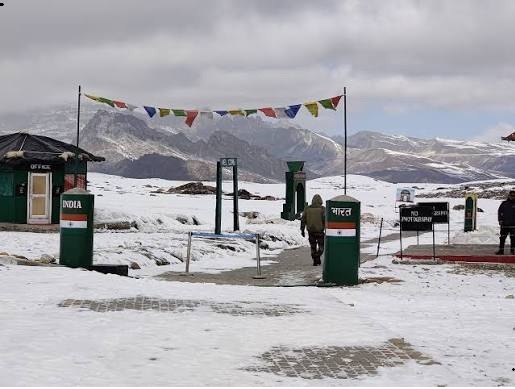
At Wacha-Damai, a border meeting point in Arunachal Pradesh’s Kibithoo sector, the Indian and Chinese armies have opened a new channel at a place where geography, military posture and history meet with unusual intensity. On September 6, Indian and Chinese officers held the first reported corps commander-level talks in the eastern sector, discussing the situation along the Line of Actual Control and the need to preserve peace and tranquillity along the frontier. Lieutenant General Girish Kalia, commander of the Indian Army’s Dimapur-based 3 Corps, led the Indian side, according to Hindustan Times. [1]
The meeting followed the latest round of talks between the two countries’ Special Representatives in Beijing. It also came after reports of renewed tension in Taksin, a remote area of Arunachal Pradesh’s Upper Subansiri district. The New Indian Express reported that the military meeting was intended to review the LAC situation and maintain peace, while also noting reports of increased Chinese military activity in Upper Subansiri. Neither army issued a public statement detailing what was discussed or whether the meeting produced a substantive agreement. [2]
That silence matters. In the India-China border relationship, the absence of public detail is not necessarily evidence of failure; military conversations are often designed to lower temperatures away from public view. But it is equally important not to mistake a meeting for a settlement. The Wacha-Damai talks do not resolve the boundary dispute, settle the alignment of the LAC or establish that the wider relationship has returned to normal. They represent something narrower and, in the present circumstances, essential: a mechanism for managing encounters between heavily armed forces operating on terrain where the two sides do not even agree on the location of the line they are patrolling.
“In case the border defence forces of the two sides come to a face-to-face situation…both sides shall exercise maximum self-restraint, refrain from any provocative actions, not use force or threaten to use force against the other side.” — Article VIII of the 2013 India-China Border Defence Cooperation Agreement. [3]
The Wacha-Damai meeting is therefore best understood as a test of those guardrails. It asks whether agreements negotiated over three decades can still restrain two armies whose relationship has been transformed by the deadly Galwan clash of 2020, the Tawang confrontation of 2022 and the continuing strategic contest across the Himalayas.
A meeting in a sector where the border itself is contested
The Line of Actual Control is a de facto military line, not a mutually demarcated international boundary. It stretches across a vast and difficult frontier from Ladakh in the west to Arunachal Pradesh in the east. India and China hold different perceptions of where the line lies, and both sides patrol up to their own understanding of it. That creates a structural danger: a patrol can be operating within what one country regards as its territory while entering what the other regards as its own.
The eastern sector is particularly sensitive because China claims Arunachal Pradesh in its entirety, describing it as “Zangnan” or southern Tibet. India administers Arunachal Pradesh as an integral state of the Union. The two governments have repeatedly rejected each other’s territorial positions, and the disagreement is reinforced by the region’s strategic importance: it overlooks approaches into the eastern Himalayas, includes the Tawang area that is central to Tibetan Buddhist history, and sits astride a frontier shaped by colonial-era boundary arrangements that Beijing does not accept. [4]
Wacha-Damai is not an arbitrary venue. A 2005 protocol on confidence-building measures identified Kibithu-Damai as a site that could be added to the network of border meeting points. The protocol called for restraint during face-to-face encounters, immediate consultations and the avoidance of provocative actions. [5] The latest meeting thus took place within an institutional architecture that predates the current crisis, but in a security environment far more brittle than the one in which those rules were negotiated.
The reported trigger for the latest military engagement was not a confirmed full-scale clash. Current reports describe tensions in Taksin and increased military activity in Upper Subansiri, but do not publicly establish the kind of detailed sequence—casualties, physical confrontation or verified territorial change—that would justify calling the episode an armed clash. That distinction is important. On a frontier where rumour can travel faster than official clarification, imprecise language can itself raise the risk of escalation.
The meeting nevertheless carries weight because it is the first reported corps commander-level engagement in Arunachal Pradesh since the latest Special Representatives’ discussions. Hindustan Times reported that two additional sites for senior high military commander meetings were among eight points of consensus reached in Beijing. [1] This suggests that the two sides are attempting to broaden the geography of crisis management beyond eastern Ladakh, where most post-2020 military negotiations have been concentrated.
The recent pattern: from Galwan to Tawang and now Upper Subansiri
The current talks cannot be separated from the military crisis that began in 2020. In the spring of that year, Indian and Chinese forces confronted each other at multiple points in eastern Ladakh. The most consequential episode occurred in the Galwan Valley on June 15, when soldiers fought in close combat. Twenty Indian soldiers were killed. China later acknowledged four deaths on its side. The encounter was the first fatal confrontation between the two countries’ forces in decades and transformed the political meaning of every subsequent patrol and military meeting. [6] [7]
The Galwan fighting was shaped by the peculiar rules of the frontier. Earlier confidence-building agreements had restricted the use of firearms and explosives close to the LAC. The result was not peace, but a dangerous form of restraint in which troops could confront one another with improvised weapons while firearms remained slung. Reuters’ reconstruction of the episode described hand-to-hand fighting involving clubs and rods after a dispute over positions and structures in the valley; India and China offered sharply different accounts of responsibility. [8]
The crisis produced a massive military mobilisation. Troops, armour, artillery, aircraft and logistics networks were deployed in a high-altitude environment where winter itself is a strategic factor. Negotiations between military commanders and diplomats led to disengagement at several friction points, but disengagement did not amount to a final settlement. It reduced the immediate risk at particular locations while leaving the larger dispute—and the military infrastructure supporting each side—intact.
The 2022 Tawang confrontation demonstrated that the crisis was not confined to Ladakh. On December 9, Indian and Chinese troops clashed in the Yangtze area of Arunachal Pradesh’s Tawang sector. India’s Defence Minister said Chinese troops had attempted to enter Indian territory and alter the status quo; China said Indian troops had crossed the LAC. Both sides reported minor injuries. The episode ended without firearms being used and was followed by local commander-level contacts and diplomatic exchanges. [9] [10]
Tawang was a warning that the eastern sector could become the next theatre of sustained pressure. Its political sensitivity is amplified by China’s claims over Arunachal Pradesh and by the symbolic importance of Tawang in Tibetan Buddhist history. The Wacha-Damai meeting, occurring after fresh tension in Upper Subansiri, is therefore not an isolated procedural event. It is part of a continuing effort to keep multiple flashpoints from becoming interconnected.
The current military challenge is not simply the possibility of a sudden attack. It is the cumulative effect of patrol friction, infrastructure construction, troop deployments, surveillance, competing maps and public claims. Each side can portray its actions as defensive while interpreting the other’s actions as attempts to change the status quo. That is the classic logic of a security dilemma: measures intended to improve one country’s security are read by the other as preparation for coercion.
Why the old agreements matter—and why they failed to prevent Galwan
India and China spent the decades after the 1962 war building a legal and diplomatic framework to ensure that the unresolved boundary would not automatically produce armed conflict. The 1993 Agreement on the Maintenance of Peace and Tranquillity created a framework for managing the frontier pending final demarcation. It envisaged troop reductions compatible with friendly relations and confidence-building measures, including notification of troop movements. [11]
The 1996 Agreement on Confidence-Building Measures added military restraints. Later protocols addressed exercises, air intrusions, flag meetings and the conduct of troops when patrols came face to face. In 2005, the two governments agreed that pending a final settlement they would respect and observe the LAC, while providing procedures for avoiding escalation during encounters. In 2013, they created a more detailed border-defence cooperation framework involving meetings between commanders, information exchanges and mechanisms for clarification. [3] [5]
These agreements helped maintain a relatively stable frontier for years. They did not solve the boundary question, but they supplied procedures for managing it. The problem exposed by 2020 was that the procedures depended on a basic level of political trust and a shared willingness to preserve the status quo. Once either side believed the other was attempting to change facts on the ground, the same agreements became contested rather than protective.
The Indian government’s account, set out in a 2025 parliamentary answer, is that China made attempts from April-May 2020 to unilaterally alter the status quo in the western sector. Beijing disputes India’s characterisation of events. Whatever the competing narratives, the consequences are not in doubt: peace along the LAC was seriously disturbed, tens of thousands of troops were deployed, and the two sides entered a prolonged cycle of military and diplomatic talks. [12]
By October 2024, India said it had reached an agreement with China on patrolling arrangements in Depsang and Demchok. The Ministry of External Affairs said the arrangement led to disengagement from all the 2020 friction points and allowed patrolling, and where applicable grazing, to resume according to longstanding pre-crisis practices. Reuters described the agreement as opening the door to a possible resolution of the standoff, while also noting the long road still ahead. [12] [13]
That development reduced one layer of the crisis. It did not eliminate the need for local military mechanisms. Nor did it erase the broader distrust created by the deployment of troops, the construction of infrastructure and the collapse of confidence in the assumption that existing agreements would always hold.
Timeline: India-China relations and the border question since 1947
| Period | Milestone | Significance |
| 1947-50 | India becomes independent; PRC is founded; India recognises the PRC and establishes diplomatic relations on April 1, 1950. | The modern bilateral relationship begins amid decolonisation and revolutionary change. [14] |
| 1950-54 | China establishes control over Tibet; India and China sign the Tibet trade/intercourse agreement and articulate Panchsheel. | Tibet becomes the central strategic bridge between the two countries. [14] [15] |
| 1959-62 | Dalai Lama receives asylum in India; border tensions and disputes over Aksai Chin and the McMahon Line intensify. | The political relationship collapses into military confrontation. [4] |
| October-November 1962 | China-India war; Chinese forces advance in the east and retain control of Aksai Chin in the west after a unilateral ceasefire. | The war creates the enduring strategic and psychological rupture. [4] |
| 1967 | Clashes occur at Nathu La and Cho La. | The post-war freeze remains militarily dangerous. [4] |
| 1976-88 | Ambassadorial ties are restored; Sumdorong Chu standoff occurs; Rajiv Gandhi visits China in 1988. | The two sides begin a gradual normalisation and create a framework for border talks. [4] [14] |
| 1993-2005 | Peace and tranquillity, confidence-building, political parameters and implementation protocols are negotiated. | The boundary remains unresolved, but both sides construct guardrails against conflict. [5] [11] [12] |
| 2013-14 | Depsang and Chumar standoffs; 2013 Border Defence Cooperation Agreement. | Local confrontations begin testing the post-1990s mechanisms. [3] [4] |
| 2017 | Doklam standoff lasts 73 days. | The crisis demonstrates the wider regional implications of border infrastructure and Bhutan-China claims. [4] |
| 2018-19 | Wuhan and Mahabalipuram informal summits. | Leaders seek to restore strategic communication and contain differences. [14] [16] |
| 2020 | Galwan and wider eastern Ladakh crisis; 20 Indian soldiers and four Chinese soldiers are reported killed in the Galwan clash. | The relationship enters its most serious crisis in decades. [6] [7] |
| 2022 | Tawang/Yangtze confrontation in Arunachal Pradesh; minor injuries reported on both sides. | The eastern sector again becomes a visible flashpoint. [9] [10] |
| October 2024 | India and China agree on patrolling arrangements in Depsang and Demchok, according to India’s MEA. | Disengagement is reported from all 2020 friction points, though the wider boundary dispute remains. [12] [13] |
| September 2026 | First reported corps commander-level talks in Arunachal Pradesh at Wacha-Damai. | The two armies extend high-level border-management dialogue into the eastern sector amid renewed tension in Upper Subansiri. [1] [2] |
The first chapter: 1947 to the 1962 rupture
The modern relationship began amid the aftershocks of decolonisation and revolution. India became independent in 1947. The People’s Republic of China was established in October 1949 after the Communist victory in the Chinese Civil War. India recognised the PRC in December 1949 and established diplomatic relations with Beijing on April 1, 1950, becoming one of the first non-communist countries to do so. [14]
The early relationship was shaped by a mixture of anti-colonial solidarity, civilisational confidence and strategic miscalculation. India’s leaders saw China as a fellow Asian civilisation emerging from foreign domination. The two countries promoted the language of Asian solidarity, and the phrase “Hindi Chini bhai bhai”—Indians and Chinese are brothers—captured the warmth of the 1950s.
Tibet changed the strategic equation. China’s establishment of control over Tibet in 1950-51 brought the People’s Liberation Army to India’s northern doorstep. India gradually accepted Chinese control over Tibet, and the 1954 Agreement on Trade and Intercourse described Tibet as the “Tibet region of China.” That same period produced Panchsheel, the Five Principles of Peaceful Coexistence: mutual respect for territorial integrity and sovereignty, mutual nonaggression, mutual noninterference, equality and mutual benefit, and peaceful coexistence. [14] [15]
The principles were ambitious, but the frontier remained undefined. The dispute involved two principal theatres. In the west, India claimed Aksai Chin, a high plateau controlled by China and strategically important because it links Xinjiang and Tibet. In the east, India relied on the McMahon Line associated with the 1913-14 Simla Convention, while China rejected the line and disputed the validity of colonial-era arrangements. The competing claims were not merely cartographic: they were tied to roads, passes, settlements, military access and the political status of Tibet and the Himalayan borderlands.
Relations deteriorated after the 1959 Tibetan uprising and India’s decision to grant asylum to the Dalai Lama. Beijing accused India of interference; New Delhi said the decision was humanitarian. Border skirmishes intensified. India adopted the Forward Policy in 1961, establishing posts in contested areas. Diplomatic efforts, including Premier Zhou Enlai’s 1960 visit to India, failed to bridge the positions. [4]
On October 20, 1962, Chinese forces launched attacks in both the eastern and western sectors. Indian troops were outmatched in preparation, logistics and coordination. In the east, Chinese forces advanced toward what was then the North-East Frontier Agency, now Arunachal Pradesh; in the west, China secured control over Aksai Chin. Beijing declared a unilateral ceasefire on November 21 and withdrew in the eastern sector behind the McMahon Line, while retaining control over Aksai Chin. [4]
The war shattered the political assumptions of the 1950s. Diplomatic relations were downgraded, ambassadors were withdrawn and public trust collapsed. The boundary remained unsettled, but the conflict left a military reality that continues to shape negotiations: China controls Aksai Chin, India administers Arunachal Pradesh and both sides continue to contest the frontier’s legal and strategic meaning.
The long freeze and the first attempt at normalisation
For much of the period from 1962 to the mid-1970s, the relationship was frozen. The 1967 clashes at Nathu La and Cho La in Sikkim showed that the absence of a full-scale war did not mean the absence of serious military confrontation. China and India also moved into opposing strategic patterns: India deepened ties with the Soviet Union, while China developed a close relationship with Pakistan.
Ambassador-level relations were restored in 1976. The regional environment was changing. China under Deng Xiaoping sought a stable external environment for economic modernisation, while India, having fought wars with Pakistan and facing a complicated Asian security environment, had reasons to reduce the risk of simultaneous confrontation on multiple fronts.
The Sumdorong Chu standoff in 1986-87, in Arunachal Pradesh, brought the two countries close to another major crisis. China objected to India’s administration of the region, and India responded with military deployments and exercises. The standoff ultimately encouraged a political effort to reset relations rather than allowing the boundary dispute to dictate the entire relationship.
That reset came with Prime Minister Rajiv Gandhi’s visit to China in 1988, the first by an Indian prime minister since Jawaharlal Nehru’s visit in 1954. The two sides agreed to create a Joint Working Group on the boundary and, crucially, to separate the boundary question from the development of wider bilateral relations. The formula was pragmatic: keep negotiating the border while expanding trade, political contacts and cooperation elsewhere. [14] [16]
The logic worked for a time. It did not produce a boundary settlement, but it reduced the likelihood that every disagreement would become a confrontation. It also created the conditions for the agreements of the 1990s, which focused on peace and military restraint rather than on the impossible demand that the final border be settled immediately.
From confidence-building to competitive engagement
The post-1988 period produced a dense network of agreements and mechanisms. The 1993 peace and tranquillity agreement, the 1996 military confidence-building agreement, the 2005 protocol, the 2005 political parameters agreement, the 2012 Working Mechanism for Consultation and Coordination and the 2013 Border Defence Cooperation Agreement all reflected a common principle: the boundary might remain unresolved, but the dispute must not be allowed to produce war. [12]
The political relationship also expanded. In 2003, Prime Minister Atal Bihari Vajpayee and Premier Wen Jiabao declared that India and China had broad common interests and that their differences should not be allowed to affect the overall development of relations. The Special Representatives mechanism was established to explore a political framework for a boundary settlement. India reiterated its recognition of the Tibet Autonomous Region as part of China, while China moved over time toward acknowledging Sikkim as part of India. [16]
Economic ties grew rapidly, although unevenly. China became a major source of manufactured goods, machinery, electronics and industrial inputs for India. India’s trade deficit widened, turning the economic relationship from a possible stabilising force into another source of friction. At the strategic level, China’s ties with Pakistan, including the China-Pakistan Economic Corridor through territory claimed by India, added to New Delhi’s concerns.
The period was therefore one of competitive engagement. India and China cooperated in forums such as BRICS, the Shanghai Cooperation Organisation, the G20 and the World Trade Organisation, while competing over influence in South Asia, the Indian Ocean, technology, connectivity and the future regional order. The relationship was not reducible to either friendship or hostility. It was a coexistence of economic interdependence and strategic distrust.
Doklam, Wuhan and the limits of summit diplomacy
The 2017 Doklam standoff exposed the limits of the earlier approach. China attempted road construction in an area claimed by Bhutan near the India-Bhutan-China trijunction. India intervened, citing its security interests and its relationship with Bhutan. The standoff lasted 73 days before the two sides disengaged. [4]
The crisis prompted two informal summits between Prime Minister Narendra Modi and President Xi Jinping: Wuhan in 2018 and Mahabalipuram in 2019. The meetings sought to improve strategic communication and prevent another border confrontation. They demonstrated that political leaders could create space for dialogue after a military standoff, but they could not substitute for a mutually accepted boundary or restore trust at the operational level.
The lesson became stark in 2020. Summit diplomacy could moderate the relationship, but it could not, by itself, prevent local commanders from confronting one another on an undemarcated frontier.
What Wacha-Damai can—and cannot—accomplish
The importance of the latest talks lies in their modesty. A corps commander-level meeting is not a grand bargain. It is a practical device for clarifying intentions, reducing the chance of miscalculation and creating a direct channel when patrols or infrastructure activity produce friction. In the best case, such a meeting can prevent a local incident from becoming a national crisis. In the worst case, it can become another episode in a cycle where dialogue follows confrontation without changing the underlying behaviour that produced it.
There are at least four questions that will determine whether Wacha-Damai becomes more than a symbolic encounter.
First, can the two sides establish reliable communication before and during patrol confrontations? The agreements envisage flag meetings, command contacts and clarification mechanisms. The value of those tools depends on speed and trust. A clarification that arrives after troops have already confronted one another may be diplomatically useful but operationally late.
Second, will both armies show restraint not only during face-to-face encounters but also in the infrastructure race behind them? Roads, bridges, airfields, surveillance systems and permanent troop facilities are presented by each side as defensive necessities. Yet infrastructure changes the military balance and can be interpreted as preparation for coercion. Without wider political understandings, every construction project risks becoming part of the next dispute.
Third, will the two governments distinguish border management from boundary settlement? The immediate objective should be to prevent violence. The long-term objective is a fair, reasonable and mutually acceptable boundary settlement. Conflating the two makes progress impossible: the first requires practical rules now, while the second requires concessions that neither side has so far been willing to make.
Fourth, can military stabilisation support a broader political reset without allowing economic or diplomatic engagement to obscure unresolved security risks? India’s official position after Galwan has been that peace and tranquillity on the border are essential for the normal development of the wider relationship. China has also continued to engage India through diplomatic channels while defending its territorial claims.
The two countries need dialogue, but they disagree over what normalisation should mean and in what order it should occur. The 2025 Indian parliamentary account says the October 2024 patrolling arrangement in Depsang and Demchok was implemented and that prior disengagement agreements remained in force. [12] The 2026 corps commander meeting in Arunachal Pradesh indicates that the two sides are continuing to build or revive practical mechanisms beyond those specific Ladakh arrangements. It is a sign of engagement, but not yet a sign that the strategic mistrust has disappeared.
India-China relations have travelled from civilisational admiration to postcolonial solidarity, from “Hindi Chini bhai bhai” to the trauma of 1962, from a long freeze to carefully managed normalisation, and from expanding trade to strategic competition. Every phase remains present in the next one. Panchsheel survives as diplomatic vocabulary, but the memory of 1962 shapes military planning. The confidence-building agreements of the 1990s still govern encounters, but Galwan exposed the fragility of their assumptions. Wuhan and Mahabalipuram showed the value of leader-level communication, but the 2020 crisis demonstrated that summits cannot alone settle operational disputes.
At Wacha-Damai, the immediate task is not to rewrite that history. It is to stop history from repeating itself in the form of another violent encounter. The meeting gives both sides a place to explain, warn, object and, ideally, step back. That may sound limited against the scale of the boundary dispute. But on a frontier where a patrol, a road or a misunderstood movement can trigger a national crisis, limited mechanisms are often the first line of strategic stability.
The durable test will be whether the two armies return to the table before the next confrontation, not after it. If Wacha-Damai becomes a regular and credible channel, it could help restore the practical restraint that the border agreements were designed to provide. If it remains a one-off response to renewed pressure, it will be remembered as another pause in a cycle of confrontation. The mountains will not settle the boundary. Political leaders will have to do that. Until they are ready, commanders at places such as Wacha-Damai will continue to carry the burden of keeping an unresolved border from becoming an unmanageable war.
References
[1]: Hindustan Times — “India, China armies hold LAC talks in Arunachal Pradesh”
[2]: The New Indian Express — “India, China armies hold LAC talks in Arunachal Pradesh”
[3]: Ministry of External Affairs — Agreement on Border Defence Cooperation, October 23, 2013
[4]: Encyclopaedia Britannica — “India-China relations”
[5]: Ministry of External Affairs — 2005 Protocol on Confidence-Building Measures
[6]: Council on Foreign Relations — “The China-India Border Dispute: What to Know”
[7]: Reuters — “The long road to resolving the India-China border stand-off”
[8]: Reuters Graphics — “India-China clash”
[9]: Reuters — “Indian, Chinese troops clash for first time since 2020”
[10]: The Associated Press — “Indian, Chinese troops clash at border in fresh faceoff”
[13]: Reuters — “The long road to resolving the India-China border stand-off,” October 21, 2024
[14]: Ministry of External Affairs — India-China Bilateral Brief
[15]: Encyclopaedia Britannica — “India-China relations,” early diplomatic ties and Panchsheel
Source note
This article distinguishes confirmed facts from attributed claims. The September 2026 Arunachal meeting was reported by established Indian news organisations, but neither army released a detailed public readout in the sources reviewed. The current Upper Subansiri episode is therefore described as reported tension and military activity, not as a confirmed armed clash. The historical and agreement-related material is based primarily on the Ministry of External Affairs, Encyclopaedia Britannica, Reuters, the Council on Foreign Relations, the Associated Press and the United Nations Peacemaker database.