When news broke last week that Iran’s Supreme Leader Ayatollah Ali Khamenei had been killed during U.S.–Israeli strikes on Tehran, reactions rippled across the Middle East and beyond. Iran declared national mourning and postponed public funeral ceremonies amid expectations of massive crowds.
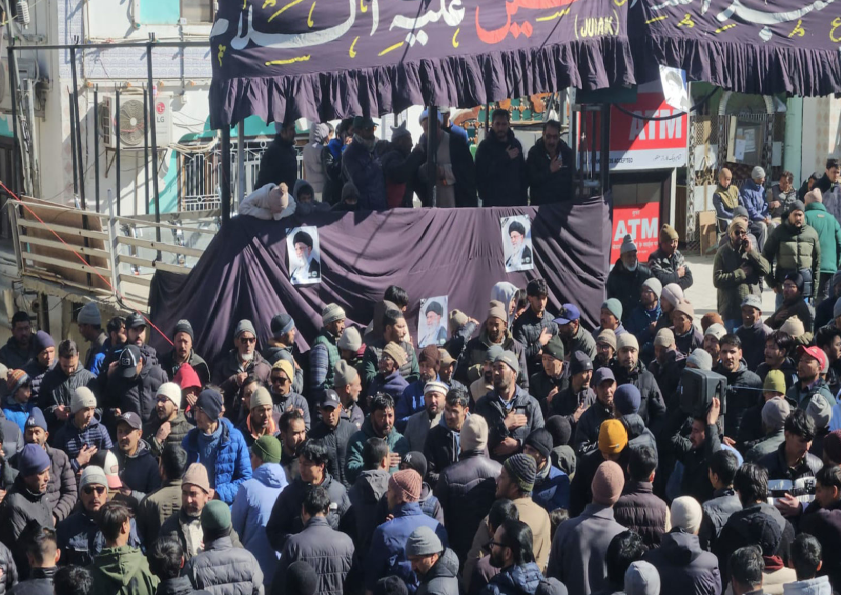
In India—thousands of kilometres away—mourning gatherings, demonstrations, and religious processions emerged in several cities. Protests and condolence meetings were reported in Srinagar, Lucknow, Bengaluru, and other locations where Shia communities are concentrated.
Why would the death of a foreign political leader provoke such an emotional reaction among sections of Indian Muslims?
Perhaps, the answer lies in a layered history spanning fourteen centuries—one that connects the earliest divisions within Islam to the evolution of Shia culture in India, the rise of Iran as a centre of Shia political authority, and the enduring networks of faith and scholarship linking South Asia with the Middle East.
Shia–Sunni Split: Origins of a historical divide
The division between Sunni and Shia Islam began almost immediately after the death of the Prophet Muhammad in 632 CE. The central question confronting the early Muslim community was who should succeed him as leader of the ummah, or Muslim community.
Most Muslims accepted the authority of successive caliphs chosen by consensus among leading companions of the Prophet. This group became known as Sunnis, referring to their adherence to the prophetic tradition (sunna).
Another group believed that leadership should remain within the Prophet’s family, specifically through Ali ibn Abi Talib, his cousin and son-in-law. Supporters of this view became known as Shi‘at Ali—the “party of Ali”—from which the term Shia is derived.
The conflict reached a defining moment in 680 CE at the Battle of Karbala, where Ali’s son Husayn was killed along with his small band of followers while resisting the Umayyad caliph Yazid. For Shia Muslims, the tragedy of Karbala became the foundational narrative of their faith, symbolizing sacrifice, injustice, and resistance against tyranny.
Over centuries, theological, political, and ritual differences emerged between the two communities. Among Shias, the memory of Karbala evolved into a powerful religious culture of mourning expressed through Muharram processions, elegiac poetry, sermons, and public rituals commemorating Husayn’s martyrdom. These rituals later travelled across the Muslim world—including to the Indian subcontinent—where they became central to Shia communal life.
Emergence of Shia communities in India
Shia Islam arrived in the Indian subcontinent through migration, trade, scholarship, and political patronage from the medieval period onward. Iranian and Central Asian scholars travelled to India under Muslim dynasties, bringing with them Persian religious traditions and intellectual networks.
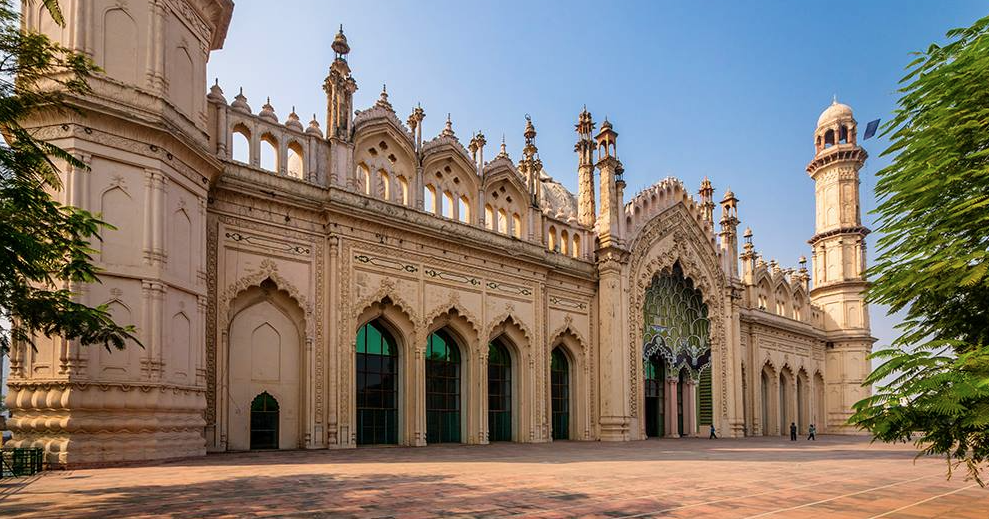
By the eighteenth century, Shia influence had become especially strong in the kingdom of Awadh in North India, ruled by Shia nawabs who patronized scholars, poets, and clerics. Under their rule, cities such as Lucknow developed into major centers of Shia culture outside the Middle East.
The Awadh court sponsored the construction of monumental religious structures including the Asafi Imambara and other ceremonial complexes that hosted large mourning gatherings during Muharram. These public rituals, along with the flourishing of Urdu elegiac poetry known as marsiya, helped create a distinctive Indo-Shia cultural tradition.
Scholars studying the period note that the Awadh state played a decisive role in institutionalizing Shia religious life in India, supporting seminaries, charities, and communal organizations.
Even after the British annexation of Awadh in 1856, Lucknow remained a powerful center of Shia identity. Religious institutions, including seminaries and trusts such as the Husainabad Trust, continued to shape the social and political life of the community.
During the colonial period and into the twentieth century, Indian Shias organized associations, schools, and conferences that strengthened their communal networks. Research on the United Provinces (modern Uttar Pradesh) shows the formation of madrasas and institutions such as the All-India Shia Conference, reflecting an increasingly organized religious community.
Today, India is home to one of the world’s largest Shia populations, though Shias remain a minority within the broader Muslim population of the country.
Ayatollah Ruhollah Khomeini and the Iranian Revolution
Modern Shia politics cannot be understood without examining the legacy of Ayatollah Ruhollah Khomeini, the cleric who led the Iranian Revolution of 1979.
The revolution overthrew the monarchy of Shah Mohammad Reza Pahlavi and established the Islamic Republic of Iran, a state built around the doctrine of Velayat-e Faqih—the rule of the Islamic jurist. Under this system, a senior Shia cleric serves as Supreme Leader with ultimate authority over the state.
Khomeini’s rise transformed Iran into the world’s most powerful Shia political centre. For many Shias globally, especially those living as minorities, the revolution symbolized a dramatic moment of empowerment and resistance against Western-backed regimes.
Khomeini’s ideas circulated widely across the Muslim world through religious seminaries, political movements, and translated writings. In South Asia, his speeches and theological works were discussed in clerical institutions and among political activists during the 1980s and 1990s.
There are also persistent historical narratives suggesting that Khomeini’s ancestors may have originated from Kintoor village in Uttar Pradesh, a claim that has periodically drawn attention in Indian media. While historians debate the details, the story has reinforced the sense of a cultural link between Iran and India.
After Khomeini’s death in 1989, the leadership of the Islamic Republic passed to Ali Khamenei, who would become one of the most influential figures in Middle Eastern politics for more than three decades.
Ali Khamenei and the Global Shia Imagination
Ali Khamenei assumed the position of Supreme Leader in 1989, succeeding Khomeini at a time when Iran was emerging from the devastation of the Iran-Iraq War. Over the next three decades, he presided over a state that combined religious authority with strategic regional influence.
Under Khamenei’s leadership, Iran supported a network of Shia-aligned political movements across the Middle East and positioned itself as a defender of what it described as “resistance” against Western and Israeli influence.
Although many Muslims worldwide held diverse views about Iran’s policies, for many Shia believers Khamenei represented not just a political figure but a senior religious authority whose statements carried theological weight. His influence extended beyond the Middle East through the circulation of sermons, books, and online broadcasts. Clerical networks linking seminaries in Najaf, Qom, and South Asia ensured that Iranian religious debates were closely followed in Indian Shia circles.
However, this spiritual connection is not without its complexities. While many Indian Shias hold the Supreme Leader in high regard, the Indian government has, at times, expressed concerns over statements made by Iranian leaders regarding internal Indian affairs. For instance, Ayatollah Ali Khamenei’s appeals to Muslims worldwide to support the freedom struggle in Kashmir have led to protests from the Indian government. Similarly, Khamenei’s comments on the “suffering” of Muslims in India in September 2024 were condemned by the Indian Ministry of External Affairs, which urged Iran to examine its own record on minority rights.
India-Iran relations beyond religion
Beyond the religious and cultural threads, India and Iran share significant geopolitical and economic interests. Historically, Iran was a major oil supplier to India, though these imports have seen a dramatic decline in recent years due to international sanctions.
A cornerstone of their strategic partnership is the development of the Chabahar Port in Iran. This port is crucial for India, providing a vital gateway to Afghanistan and Central Asia, bypassing Pakistan. It is also an integral part of the International North-South Transport Corridor (INSTC), a multi-modal network aimed at facilitating trade between India, Iran, Afghanistan, and beyond.
India and Iran have also found common ground in regional security, particularly concerning Afghanistan. Both nations supported the Northern Alliance against the Taliban in the 1990s and continued to collaborate in supporting the broad-based anti-Taliban government until the Taliban’s resurgence in 2021.
However, the relationship is not without its complexities and divergences. India has, at times, found itself in a delicate balancing act, navigating its ties with Iran amidst international pressure, particularly from the United States. India’s vote against Iran in the International Atomic Energy Agency (IAEA) in 2005, despite close relations, highlighted these geopolitical pressures.
Mourning in India After Khamenei’s Death
When reports emerged that Khamenei had been killed in a joint U.S.–Israeli strike, reactions spread quickly through Shia communities across South Asia.
In India, mourning ceremonies and protests were reported in multiple locations. Demonstrations took place in Lucknow and Kashmir, while security restrictions were imposed in parts of the Kashmir Valley after large crowds gathered in protest.
In Bengaluru, hundreds joined a solidarity march organized by Shia associations, carrying portraits of Khamenei and holding prayer gatherings.
Even small communities responded. In the Karnataka village of Alipur—where residents say Khamenei had once supported local welfare projects—shops were closed and a three-day mourning period was observed.
The reactions were not uniform across India’s Muslim population. Many Muslims did not participate in the protests, reflecting the diversity of political and theological views within the community. Nevertheless, the scale of mourning among some Shia groups highlighted how deeply global religious identities can resonate at the local level.
Transnational networks of Shiism
The emotional response to Khamenei’s death illustrates a key feature of Shia history: its transnational character.
For centuries, Shia religious life has been shaped by networks connecting communities across Iran, Iraq, Central Asia, and South Asia. Pilgrimage routes to the shrine cities of Najaf and Karbala, scholarly exchanges among clerics, and the shared rituals of Muharram have created a sense of belonging that transcends national boundaries.
Cities such as Lucknow became vital nodes in this network, producing scholars, poets, and institutions that connected Indian Muslims with the wider Shia world. The mourning rituals of Muharram—processions, sermons, and poetic recitations—remain among the most visible expressions of this global religious culture.
Within such a framework, the death of a prominent Shia cleric in Iran can resonate emotionally with believers in India, Pakistan, Iraq, or Lebanon. It is not simply a geopolitical event but part of a shared religious narrative.
For those who consider Khamenei their Marja-i-Taqlid, his passing represents the loss of a spiritual guide whose pronouncements shaped their understanding and practice of faith. The emotional outpouring seen in various parts of India, from Lucknow to Kashmir, with public gatherings, prayer meetings, and expressions of grief, underscores this profound religious connection.
The mourning that followed the death of Ayatollah Ali Khamenei in parts of India was not merely a reaction to the passing of a foreign political leader. It reflected a long historical relationship linking Indian Shia communities with the religious centres of the Middle East. From the early Shia-Sunni divide and the tragedy of Karbala, to the flourishing of Shia culture in Awadh and the revolutionary transformation of Iran under Ayatollah Khomeini, the story of Shiism has always been transnational.
Furthermore, the Iranian leadership, since the Islamic Revolution, has often positioned itself as a defender of oppressed Muslim communities globally. This narrative resonates with some Indian Muslims, who view Iran as a powerful voice on the international stage advocating for Muslim causes. The perceived solidarity with Iran, especially in the face of perceived external pressures, contributes to this sense of connection.
However, it is also important to acknowledge that the response is not monolithic. While a significant portion of the Shia community expresses grief, there are diverse opinions and perspectives within the broader Indian Muslim population. Some may view the mourning through a purely religious lens, while others might be more critical of the political aspects of the Iranian regime.
In that sense, the demonstrations in Kashmir, Lucknow, and Bengaluru were expressions of a centuries-old religious network that continues to connect believers across continents—illustrating how faith, history, and politics can intertwine far beyond the boundaries of the modern nation-state.
References
Juan R. I. Cole, Roots of North Indian Shi‘ism: Religion and State in Awadh, 1722–1859.
Justin Jones, Shi‘a Islam in Colonial India. Cambridge University Press.
Nadeem Rezavi, “The State, Shias and Shi‘ism in Medieval India.”
Research on Shia institutions in colonial Lucknow.
News coverage of protests and reactions in India following Khamenei’s death.
India–Iran relations – Wikipedia. (n.d.). Retrieved from https://en.wikipedia.org/wiki/India%E2%80%93Iran_relations
Indo-Persian culture – Wikipedia. (n.d.). Retrieved from https://en.wikipedia.org/wiki/Indo-Persian_culture
Shia Islam in the Indian subcontinent – Wikipedia. (n.d.). Retrieved from https://en.wikipedia.org/wiki/Shia_Islam_in_the_Indian_subcontinent
Iranian Revolution – Wikipedia. (n.d.). Retrieved from https://en.wikipedia.org/wiki/Iranian_Revolution
For millions of Shia Muslims across the globe, Iran’s Supreme … – Facebook. (n.d.). Retrieved from https://www.facebook.com/maktoobmediaenglish/posts/for-millions-of-shia-muslims-across-the-globe-irans-supreme-leader-is-not-merely/1357583873059945/
India’s Shia Community and Iran’s Influence Operations – Middle East Forum. (n.d.). Retrieved from https://www.meforum.org/india-shia-community-and-iran-influence-operations
Genuine question about Shia support for Iran in India – Reddit. (n.d.). Retrieved from https://www.reddit.com/r/AskIndia/comments/1rk7w4s/genuine_question_about_shia_support_for_iran_in/
Why are Indians mourning the death of an Iranian Leader? I explain … – Instagram. (n.d.). Retrieved from https://www.instagram.com/reel/DVYvTI0j_r1/
Why Are Indian Muslims Protesting? | Lokmat Times – YouTube. (n.d.). Retrieved from https://www.youtube.com/watch?v=pc6rKAn-qmk
Why are Shia Muslims protesting across India following Khamenei’s … – Financial Express. (n.d.). Retrieved from https://www.financialexpress.com/india-news/why-are-shia-muslims-protesting-across-india-following-khameneis-killing/4159943/
Why Ayatollah Khamenei Was So Important For Shia Muslims – NDTV. (n.d.). Retrieved from https://www.ndtv.com/world-news/iran-israel-war-ayatollah-ali-khamenei-why-ayatollah-khamenei-was-so-important-for-shia-muslims-11162710